Lake Camping in Kentucky State Parks: Waterfront and Paddle-In Sites
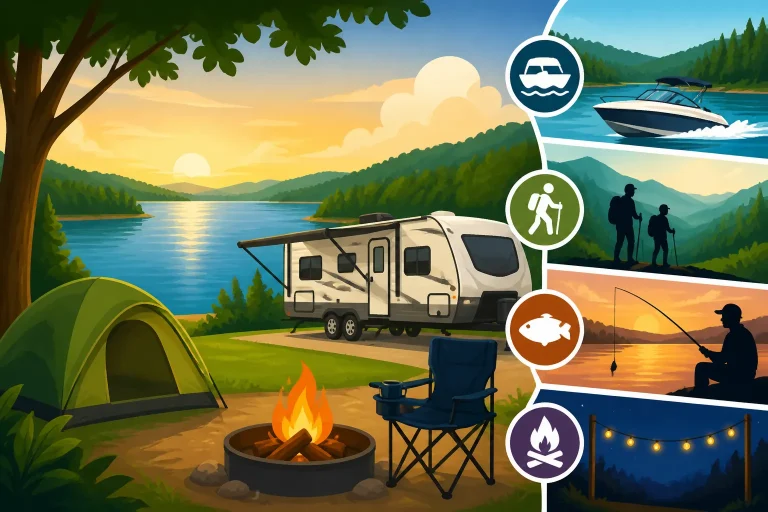
Lake camping can mean anything from parking beside a tent or RV site to carrying your overnight gear in by kayak or canoe. Those options call for different planning: check how you reach the site, what it provides, and which lake activities fit your trip. Here’s how to compare Kentucky State Park lake campsites and prepare without assuming every waterfront site works the same way.
What Lake Camping Means in a Kentucky State Park
A campsite near a lake and a campsite reached by water can look similar on a map but require very different plans. A drive-up site may let you bring supplies from your vehicle, while an access-only site makes the journey to camp part of the trip. Before settling on a location, identify what “waterfront,” “lake access,” and “paddle-in” mean for the specific campsite you are considering.
Kentucky Department of Parks says Kentucky State Parks have 31 tent and RV campgrounds. That gives campers a range of places to investigate, but the number does not mean every campground sits on a lake, has waterfront sites, or offers the same way to reach the water. Start with the park and campground that match your travel style, then confirm the characteristics of the individual site.
For lake camping, ask yourself what matters most:
- A convenient base for lake recreation: You may want a conventional campsite and plan to travel to the water during the day.
- A view from camp: A waterfront setting may be more important than being able to launch directly from the site.
- A paddle-in experience: You may be willing to carry gear by boat and manage the extra logistics.
- Room for an RV or a vehicle-accessible tent site: A paddle-in site may not fit this plan, so verify access before you reserve.
- A mix of activities: You may want to camp near the lake while also spending time on trails or elsewhere in the park.
A park name alone does not answer those questions. Look for details about the campground, the particular site, and its access method. If an online description leaves any ambiguity, check with the park or the official reservation system before committing. Useful questions include whether the site is reached by road, whether a boat is required, and where a vehicle can be left if the site is accessible only by water.
If you are still weighing lake camping against other options, Choosing a Kentucky State Park for Your Camping Trip can help frame the broader choice. For differences among campsite styles, see Tent, RV and Primitive Campgrounds Across Kentucky’s State Parks. The goal is not to find a site that sounds appealing in a short listing; it is to find one whose access, equipment needs, and setting fit the way you actually want to camp.
How to Compare Waterfront Campsites
“Waterfront” is a useful starting point, not a complete description. It tells you something about the setting, but it may not answer practical questions about approach, shoreline, or how you will use the lake. Confirm the details that affect your routine at camp rather than relying on a scenic photo or a general campground label.
Start by checking how close the campsite is to the water and whether the route between the site and the shore is straightforward. A photograph may show a view across the lake without showing the slope, vegetation, or walking path between the camping area and the water. If ease of access matters to your group, ask about the actual route and any site-specific limitations. Avoid assuming that a waterfront listing means you can launch a kayak or swim directly from your campsite.
Also clarify what the reservation covers. A campsite description may refer to a view or location without promising particular equipment or services. Confirm the site type, the number of camping units it can accommodate, vehicle access, and the facilities available at that campground. Then check whether any listed amenity is open or usable during your planned visit. Conditions and services can vary by property and season, so a detail that applies to one campground should not be assumed for another.
Think through your day at camp:
- Where will you unload food, shelter, and other gear?
- How will you get from the campsite to the water?
- Is there a convenient place to keep the items you use on the shore?
- If you bring a boat, where can it be launched and kept?
- Will you need to return to your vehicle during the day?
- How will the arrangement work for anyone who has difficulty walking on uneven ground?
These are not just comfort questions. They help you identify a mismatch before arrival, when it is easier to adjust your plans. For example, someone who wants to spend the evening beside the water but does not plan to boat may be better served by a conventional waterfront campsite than an access-only site. A paddler seeking a secluded overnight outing may value the water-access arrangement more than proximity to a vehicle.
To compare options, make a short list of the features that matter most and check each candidate against it. The park with the most appealing view is not automatically the best fit if the access method or site layout complicates your trip. For further context on lake and river access at these properties, see Lake and River Access at Kentucky Resort Parks for Campers. Confirm the details for the campground you plan to use rather than treating general descriptions as guarantees for every location.
Kayak and Canoe Access-Only Campsites
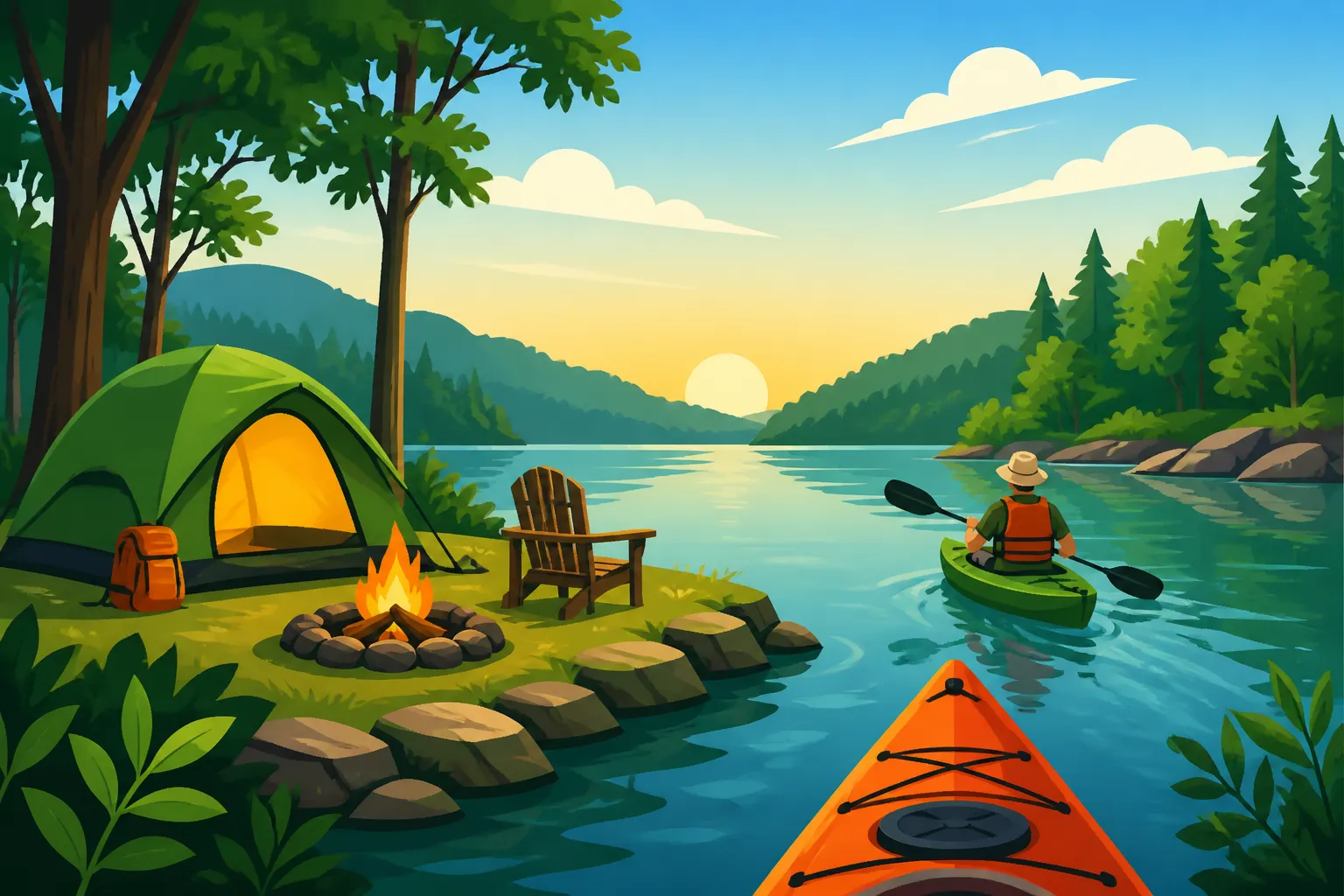
Kentucky Department of Parks says Jenny Wiley State Resort Park and Yatesville Lake State Park offer kayak/canoe access only campsites that have waterfront views. The phrase “access only” matters: these are not simply campsites beside the water that happen to welcome paddlers. Their access arrangement should shape your equipment, timing, and packing decisions.
Before planning around one of these sites, confirm the access process for the specific location. Ask whether reaching camp requires a kayak or canoe, where you can launch, where you can leave a vehicle, and how the trip from the launch point to camp works. Do not assume that a road, dock, or convenient unloading area reaches the campsite just because one appears on a general park map. Check whether there are any site-specific directions or conditions you need to know before setting out.
Paddle-in camping adds a transportation problem to the usual camping checklist. Every item has to be manageable both on the water and at camp. That does not mean you need specialized equipment for every trip, but it does mean you should think about the load as a whole. A bulky shelter, heavy cooler, loose bags, or awkwardly shaped gear can be difficult to handle when transferring items into a boat. Decide what is essential, pack it securely, and consider how many trips or paddlers your plan depends on.
A useful planning sequence is:
- Confirm the site’s access description and route with the official reservation system or park.
- Check where you are expected to launch and where your vehicle can remain.
- Estimate the full load, including camping equipment, food, water, and clothing.
- Pack items so they can be carried and secured without blocking safe handling of the boat.
- Review the forecast and any water or access conditions that could affect your approach.
- Agree on a backup plan if the water route or conditions make the trip unsuitable.
Treat those steps as planning prompts, not as a substitute for the park’s current directions or rules. If the description is unclear, ask before traveling. It is particularly important to understand whether a paddle-in site is appropriate for everyone in your party and whether the route fits your group’s ability and equipment.
For site-specific preparation around Yatesville Lake, Kayak-Only Campsites at Yatesville Lake: Gear and Planning and Packing a Canoe Camp Kit for Yatesville Lake’s Paddle-In Sites address the practical questions that come with carrying camp by boat. They are useful complements to checking the official description, not replacements for confirming current access details. A waterfront view can be the reward, but the site works best when the approach is as well planned as the stay.
Choose the Right Camping Setup and Pack for the Site
The way you travel influences which lake campsite makes sense. An RV camper needs to know whether a site accommodates the vehicle and whether the campground offers the connections they need. A tent camper may be focused on the tent area, ground conditions, and proximity to facilities. A paddler has an additional constraint: the complete camp load must fit the chosen watercraft and be manageable along the route.
Do not treat a campground’s general description as a promise about every individual site. Check the site type and the details that matter to your equipment. If you are traveling with a recreational vehicle, confirm that the site’s dimensions and access suit your setup. For tent camping, verify whether the listing describes a tent site and what is provided. For a paddle-in stay, confirm the transport method and any limits on how gear reaches the campsite. If something essential is missing from the description, ask before booking.
Once you have confirmed the setup, make a site-specific packing list rather than packing for “camping by a lake” in general. Include the ordinary essentials for shelter, sleeping, meals, clothing, and personal needs, then add what the access method requires. A drive-up camper may be able to bring backup supplies in a vehicle. A paddler needs to be more selective and secure items for transport. In either case, check the official campground information to learn what the site provides and what you must bring.
Food and water deserve deliberate planning. Consider how much you will need, how you will keep it protected, and how you will manage it during travel between your vehicle, launch point, campsite, and shore. Do not assume that a waterfront location includes drinking water at the site. Confirm what water is available and where, then plan for your group’s needs. If you will be carrying supplies in a boat, pack food and water in a way that is practical to move and use.
The same approach applies to cooking equipment and waste. Check the campground’s current rules and facilities instead of assuming that a campsite has a particular cooking setup or disposal option. Bring only equipment compatible with the rules and the way you are reaching camp. Plan how you will contain and remove trash, especially if you are not returning to your vehicle frequently.
For a broader inventory of what may be provided at a campsite, see What Every Kentucky State Park Campground Has, Water to Bathhouses. The title’s general topic is a useful prompt for questions, but check the specific campground rather than assuming all sites have the same services. Packing for a Kentucky State Park Campsite: What the Site Provides can also help you sort what to bring from what to verify.
A practical way to avoid overpacking is to make two lists: “confirmed at the campground” and “bringing from home.” Put an item on the first list only after checking the current information for your site. Anything uncertain belongs on the question list until you have an answer. That small distinction can prevent a common planning error: assuming that a feature offered somewhere in a park system is available at the site you selected.
Plan Lake Activities Around Your Campsite
A lake campsite can be a base for boating, shoreline time, or a quiet overnight stay, but the campsite itself does not necessarily provide every activity or facility you want. Separate “where we sleep” from “what we plan to do.” Then confirm how to reach each activity and whether it is available at the park during your visit.
If you plan to paddle, check the launch arrangement, any access directions, and the distance or route between the launch and the campsite. For an access-only site, the route is part of the trip rather than a small detail. Think about how the watercraft will be loaded, where the gear will sit, and how you will handle the return journey. If you are bringing your own craft, confirm that the park’s arrangements and your plan align; do not infer launch access from a waterfront view alone.
For swimming or shoreline recreation, verify where those activities are permitted and what facilities are available. A campsite beside the water does not necessarily mean that the shoreline there is a swimming area or a suitable place to launch. Check park information for the intended activity and follow posted directions when you arrive. If you want to combine time at camp with a separate swimming or recreation area, plan for the travel between them rather than assuming they are adjacent.
Hiking and other land-based activities can complement a lake stay, but trail access is another detail to confirm. Check which routes are open and how you will reach them from the campground. If your group includes people with different interests or energy levels, consider whether the park offers enough variety for everyone without requiring the entire group to follow the same schedule.
Kentucky Department of Parks describes Kentucky State Resort Parks as offering golf courses , swimming beaches , miles of hiking trails, lake and river access, nature programming, and onsite dining. This broad description can help campers think beyond the shoreline when considering a park stay, but it does not establish that every amenity is present at every park or open during every visit. Check the individual property’s current information for the activities and services you expect to use.
A lake trip is easier when you give each activity a realistic place in the day. Leave room for getting gear to and from the water, setting up camp, eating, and adapting to conditions. Paddle-in campers in particular should avoid planning a schedule that depends on a tight turnaround between arrival and an activity elsewhere in the park. Confirm the logistics first, then build the recreational plan around them.
If you are comparing a lakefront campground with a resort-style stay, the park’s broader offerings may matter as much as the campsite. Lakeside, Golf or Quiet? Matching a Kentucky State Park to Your Trip offers another way to think through that trade-off. For overnight planning, also check Seasonal Amenities: Timing a Kentucky State Park Trip and Checking Cell Service and Wi-Fi Before a Kentucky State Park Stay where those topics affect your plans.
Booking and Arrival: Confirm the Details That Can Change
A reservation description is a starting point for planning, not a substitute for checking current information. Before you commit, verify the exact site type, access method, and facilities you need. If you are relying on a paddle-in arrangement, make sure you understand how the launch and approach work. If you are driving an RV or bringing a large amount of equipment, confirm that the selected site fits your setup.
A helpful pre-trip check covers several layers:
- The park: Confirm that the property is the one you intend to visit and that the activities you want are available there.
- The campground: Check its current operating information, services, and access directions.
- The site: Verify whether it is waterfront, vehicle-accessible, or kayak/canoe access-only.
- Your equipment: Make sure the site works for your tent, RV, boat, or other gear.
- Your group: Consider mobility, comfort, and whether everyone is prepared for the route.
- Your arrival plan: Confirm where to go, how to check in, and what to do if you arrive outside the expected process.
Keep a copy of important directions and reservation information in a form you can use during the trip. This is especially helpful if the route to an access-only site involves steps that are not obvious from a campground overview. Do not rely on a single photo or a map pin to answer practical access questions. If the route or launch arrangement remains uncertain, contact the park through its official channels before leaving.
Conditions can also affect a lakeside stay. Weather may influence how comfortable or practical it is to paddle, and water conditions may change the experience of reaching a site. Check the forecast before departure and use the park’s current information for any site or access updates. If conditions do not suit your party or equipment, be willing to revise the plan rather than treating the reservation as a reason to proceed regardless.
When you arrive, compare what you see with the information you confirmed. Follow posted directions and ask park staff about any uncertainty that affects safety, access, or site use. If the campsite differs materially from what you understood, seek clarification before unloading or setting out on the water. These checks are particularly important for paddle-in camping, where a misunderstanding about the route may be harder to correct once gear is in transit.
Finally, keep a backup plan. That might mean identifying another activity if paddling is not appropriate, knowing what you will do if the site access does not match your expectations, or choosing a different kind of campsite if the logistics do not suit your group. A backup is not a prediction that something will go wrong; it is a practical way to make a trip more flexible. For help comparing reservation methods and campsite choices, see Getting a Kentucky State Park Campsite: Online, Phone or Walk-Up and Comparing Kentucky State Park Campgrounds: Sites, Hookups, Costs.
Common Planning Mistakes to Avoid
The most common mistake is treating “waterfront” as shorthand for direct water access. A view, a nearby shoreline, and a boat launch are different things. Confirm which applies to your campsite and how you will move between camp and water. This is particularly important when your main reason for choosing a site is paddling or launching a watercraft.
Another frequent misstep is selecting a site based on a campground-wide description. A campground may offer a variety of site types, but a particular reservation has its own access and equipment requirements. Check the details for the site you are selecting, not only the overall park page. If the listing does not answer a question that could affect your trip, ask before reserving.
Paddle-in campers can underestimate the effort of moving gear. It is tempting to plan around what fits in a car, but a boat load is a different problem. Pack with weight, shape, stability, and the number of people in mind. Decide in advance how you will handle food, shelter, and personal gear together. If your plan seems dependent on carrying an awkward load or making assumptions about where supplies can be stored, simplify it or confirm another option.
It is also easy to assume that a lake campsite includes a specific facility or activity. A waterfront location does not by itself confirm swimming access, a launch, drinking water, a particular type of restroom, or a store. Verify each service you need with current property information. Use the campground details and direct confirmation rather than relying on broad impressions of what lake parks commonly provide.
Do not overlook the needs of the people in your group. A site that suits experienced paddlers may not be the right choice for someone who is uncomfortable with the access route or has difficulty carrying equipment. Talk through the approach before booking. If you need a different level of vehicle access or a shorter walk, ask which sites meet those needs rather than assuming that a waterfront option will be convenient.
Finally, avoid filling the schedule so tightly that there is no time to set up, move gear, or adjust to conditions. A lake trip often has several transitions: arrival, unloading, reaching the shoreline or launch, and settling in. Paddle-in camping adds another layer. Build in time for those transitions, and keep alternate plans for activities that depend on the water or seasonal services. For broader campground rules and common visitor oversights, Kentucky State Park Campground Regulations, Rule by Rule and Rules First-Time Visitors Miss at Kentucky State Parks may help you identify questions to check with the official property information.
Frequently Asked Questions
Are waterfront campsites the same as paddle-in campsites?
No. “Waterfront” describes the setting, while “paddle-in” describes an access method. Confirm the details for the specific site before reserving.
Which Kentucky State Parks have kayak/canoe access-only campsites?
Kentucky Department of Parks identifies Jenny Wiley State Resort Park and Yatesville Lake State Park as offering kayak/canoe access-only campsites with waterfront views. Check each park’s current site information for access directions and requirements.
Can I assume a lake campsite has a boat launch or swimming area?
No. A campsite’s location does not establish what activities or facilities are available directly from that site. Verify launch and swimming arrangements with the park.
What should I confirm before packing for a paddle-in stay?
Check the route, launch location, vehicle arrangements, site details, and what the campground provides. Then pack for the full journey from launch to campsite, not just for the time spent at camp.
Sources
- Kentucky Department of Parks — Kentucky State Park Campground Reservations – Book Your Adventure (checked November 23, 2026)
- Kentucky Department of Parks — Kentucky State Park Cabin Rentals (checked November 23, 2026)
Disclaimer
This article is for general informational purposes only and does not constitute professional advice. Laws, prices and regulations vary by location and change over time. Consult a qualified professional for guidance on your specific situation. Kentucky Camping & RV is not a government agency and is not affiliated with any government agency.