Choosing a Kentucky State Park for Your Camping Trip
Choosing a Kentucky campground is not just a question of finding an open site. You also need to decide what kind of stay fits your group, how much infrastructure you want, and which trip priorities matter most. Kentucky’s parks vary in setting and camping style, so a little comparison can help you avoid booking a place that looks right on a map but does not suit the way you want to camp.
Start With the Kind of Park You Want
A useful first choice is whether you want a resort-style stay or a more focused outdoor trip. These are broad starting points, not guarantees about what a particular property offers. Check the campground and lodging details for the specific park before making plans.
According to Kentucky State Parks, Kentucky has 44 state parks, including 17 resort parks and 13 golf courses. The Department of Parks describes a resort park as including “a lodge with restaurants and overnight accommodations.” That makes resort parks worth considering if your group would value a lodge setting alongside camping. You can compare the broader options in Kentucky’s State Resort Parks: Lodges, Golf, Beaches and Dining and What Makes a Kentucky Park a State Resort Park?.
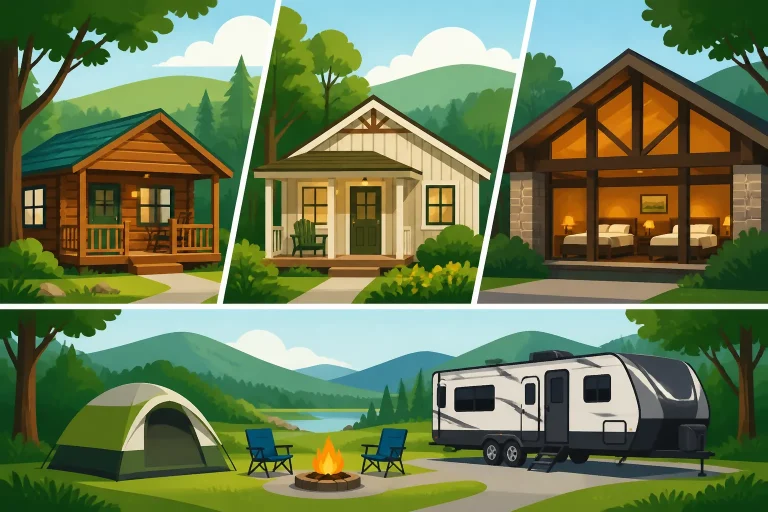
A resort park can be a practical match when your group wants more than a campsite as its base. Some members might prefer a tent or RV while others would rather have lodging; the presence of a lodge may make it easier to consider different kinds of overnight stays in one park. But do not assume that every lodge amenity is available to campers, or that a particular campground is next to the lodge. Confirm the distance, access, dining details, and any shared facilities directly with the park.
A recreational park may suit a trip where camping and outdoor time are the main draw. The Kentucky Department of Parks describes Kentucky as having 21 recreational parks. Many state recreational parks offer campgrounds with primitive and RV sites. That description gives you a reason to look at recreational parks when comparing camping styles, but it does not guarantee that every park has every site type. Check the listing for the property you are considering.
Think about how your group will spend time away from camp. If some people want a lodge or restaurant option nearby, a resort park may deserve a closer look. If the plan is to keep the trip simple and spend most of the time at the campsite or outdoors, a recreational park might be a better place to begin your search. These are selection cues, not strict categories: the details of the specific campground matter more than the label alone.
A park’s classification also does not tell you whether its campground is open for your dates, whether a specific site can accommodate your equipment, or what services are operating during your visit. Use the park type to narrow your choices, then verify practical details before committing. For a wider comparison, see Lodge Comforts or a Simple Campsite? Picking Your State Park Type.
Match the Campground to Your Camping Style
Kentucky State Parks have 31 tent and RV campgrounds, according to the Kentucky Department of Parks. The Department also describes state park campgrounds as “Spread out across the state.” Those facts are useful starting points, but the number of campgrounds does not tell you what any individual campground offers. Compare the actual site description, not just the park name.
Start by deciding how much infrastructure you need. A developed campground may be appealing if you want a defined campsite and access to campground facilities. A primitive site may fit if you are comfortable with fewer services and want a simpler setup. Do not treat “primitive” as a complete description of the experience: check what the property says about the specific site, including access, nearby facilities, and what you need to bring.
If you are taking an RV, confirm that the site type suits your vehicle and setup. A campground listing may show different site options, but a park name alone does not tell you whether a particular site will fit. Check the listed site details and ask the park or official reservation system about anything unclear, such as the site’s layout or the services included. For help thinking through site features and costs, see Comparing Kentucky State Park Campgrounds: Sites, Hookups, Costs.
For tent camping, look closely at the site description rather than assuming all tent sites are alike. Consider how you will unload, where you will pitch the tent, and whether the site details match the gear and setup you plan to bring. If you are new to camping, a site with the facilities you want may make the trip easier to manage. If you prefer a more self-reliant stay, a primitive option might be appropriate, provided you understand what it does and does not include. Tent Camping for Beginners at Kentucky State Parks: Site Basics covers the site questions that are worth sorting out before you go.
| Your priority | What to compare | Questions to confirm |
|---|---|---|
| Tent camping | Tent-site description and campground layout | Does the site match your tent and setup? What facilities are available nearby? |
| RV camping | Site type, listed services, and vehicle fit | Will the exact site accommodate your RV and planned setup? |
| A simpler stay | Whether the site is described as primitive | What services are absent, and what should you bring? |
| A lodge alongside camping | Campground location and lodge details | Is the campground convenient for your plans, and which lodge services are available? |
| A flexible group trip | Site options and nearby alternatives | Can the park accommodate different preferences, or should you compare separate stays? |
The table is a planning aid, not a substitute for the current site description. Two campgrounds at different parks can use similar labels while offering different arrangements. Likewise, a listing that fits your equipment may still be a poor choice if the location, access, or services do not work for your group.
Be realistic about your comfort level. A simpler site can be satisfying when you arrive prepared, but it can become inconvenient if you expect services that are not provided. A more developed option can make setup easier, but may not deliver the quieter or more self-contained experience you want. The right choice is not the option with the most amenities; it is the one whose trade-offs match your plans.
If you are bringing camping gear for the first time, make a list of what the site supplies and what you need to carry. Do not assume that a campsite includes equipment just because it is in a state park. For travelers without their own setup, First-Time Camping in Kentucky State Parks Without Your Own Gear can help you consider alternatives.
Choose a Location That Works for the Whole Trip
Because Kentucky’s state park campgrounds are spread across the state, location is part of the decision—not just a detail to check after picking a campground. A park that looks suitable in a general search may be a poor fit if getting there makes the trip stressful or leaves too little time for what you want to do.
Start with the people and plans involved. For a short getaway, a convenient drive and straightforward arrival may matter more than a long list of activities. For a trip built around exploring an area, think about how far you are willing to drive from camp during the stay. If different people in your group have different priorities, agree on the main purpose of the trip before comparing parks. Otherwise, you may end up choosing a campsite that satisfies one person’s plan but not the group’s.
Think about how you will arrive and move around. Check the route and access information for the specific property, especially if you are driving an RV or towing a trailer. A general map can help you compare regions, but it cannot confirm that a particular route or campsite is suitable for your vehicle. If the exact access is important, ask the park or check the official information before you book. The broader overview in Mapping Kentucky’s State Park Campgrounds From East to West can help you think geographically without treating distance as the only factor.
Your preferred setting can narrow the search, too. Some campers want a campground associated with a lodge; others are looking for a more straightforward camping base. If water access, a particular landscape, or proximity to another planned stop matters, verify that the specific park and campground meet that need. The name of a park or the general character of the property is not enough to establish that a particular site is near the feature you have in mind. For people prioritizing a lakeside stay, Lake Camping in Kentucky State Parks: Waterfront and Paddle-In Sites addresses choices where waterfront or paddle-in access is part of the question.
It can help to distinguish between the park and the campground. A park may have places or services that interest your group, but that does not necessarily mean they are close to the campsite or open during your visit. Before you settle on a property, look at the campground information as well as the broader park description. Confirm how the campground fits your intended routine: where you expect to spend most of your time, whether you plan to leave the property during the day, and how much driving you are willing to do.
For a group with varied needs, look for a choice that makes trade-offs manageable. One person may care most about a comfortable campsite, while another wants access to activities or lodging. You may not find a single park that satisfies every preference, so decide which needs are essential and which are optional. If different overnight arrangements are under consideration, compare the actual lodging and campsite options instead of assuming they are interchangeable. Camping While Relatives Stay in the Lodge at a Kentucky Resort Park explores that kind of mixed group plan.
A useful location decision is specific: it names the trip’s priorities, the acceptable travel effort, and the features that must be close at hand. That gives you a better basis for comparing campgrounds than a broad preference such as “somewhere scenic” or “somewhere near a lake.” Keep the list short enough to be practical, then verify each point against information for the actual property.
Check the Site, Facilities, and Costs Before You Commit
A good campground choice depends on details that a park category or general description cannot settle. Before booking, inspect the campsite information and identify what matters for your setup. If a detail is not clearly stated, ask the park or use the official reservation system to confirm it rather than guessing.
For an RV, check the exact site description and the fit for your vehicle. Look for the listed services and site arrangement, and confirm that the booking is for the type you need. RV travelers should not assume that all sites in a campground provide the same hookups or layout. Electric, Water, Sewer: What a Kentucky State Park RV Site Includes and Same Campground, Different Hookups: Checking Your Exact Kentucky Site offer more detail on questions to ask.
For a tent, pay attention to what the listing says about the site itself and the campground facilities. Consider how you will carry gear from your vehicle, what shelter you may need, and which services you depend on. If you plan to cook, wash up, or refill water during the stay, verify what is available rather than building your packing plan around assumptions. See Restrooms, Tables and Trail Access at Kentucky State Park Campsites and Filling Drinking Water Jugs at a Kentucky State Park Campground for focused planning help.
A campground’s facilities can affect comfort even when they are not the main reason for the trip. Bathhouse access, tables, water, waste disposal, and campground layout may matter differently depending on your group and equipment. Check which facilities the park identifies and whether they are available for the dates you are considering. Do not assume that a facility is open just because it appears in a general description.
Cost also deserves a careful comparison. The amount you pay may depend on the particular site and what is included, so check current information from the official source for your dates. Compare the whole trip rather than only the campsite charge: you may also need to consider transport, supplies, equipment rental, or another overnight arrangement. Do not rely on an old listing or a price quoted for a different site type. What Kentucky State Parks Cost: Entry, Campsites and Lodging and Budgeting a Kentucky State Park Camping Weekend can help organize the cost questions.
Read the booking details before completing a reservation. Confirm the dates, campground, site type, and any requirements that affect your planned setup. If your group is bringing a large vehicle, multiple camping units, or extra vehicles, ask about applicable campground rules instead of assuming the reservation covers every part of the arrangement. The specific rules for campers and sites are covered in Kentucky State Park Campground Regulations, Rule by Rule.
Also consider what could make you change plans. If you are choosing between a campground that suits your needs and a backup that is merely acceptable, check both options before the preferred one becomes unavailable. Understand where to find cancellation or change terms, and confirm them directly with the official reservation provider. A backup plan is especially useful when your dates depend on a seasonal opening or a facility’s operating status.
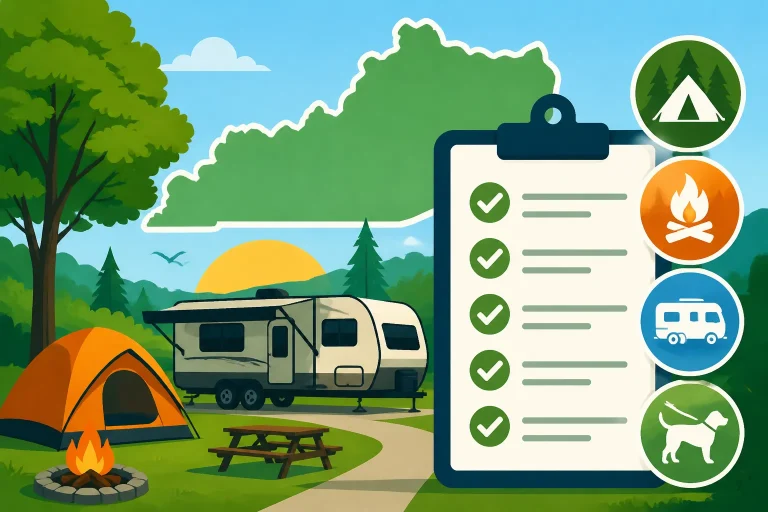
Make a short verification list before booking:
- Confirm the park and campground, not just the general park name.
- Check that the site type fits your tent or RV.
- Verify the services and facilities you expect to use.
- Review the current booking, payment, change, and cancellation details.
- Ask about any unanswered questions that could affect access or comfort.
- Save the official contact information so you can check for updates before departure.
This extra checking is not busywork. It protects you from a mismatch between what you pictured and what the site actually offers, and it gives your group a clearer idea of what to bring.
Plan Around Opening Dates, Services, and Changing Conditions
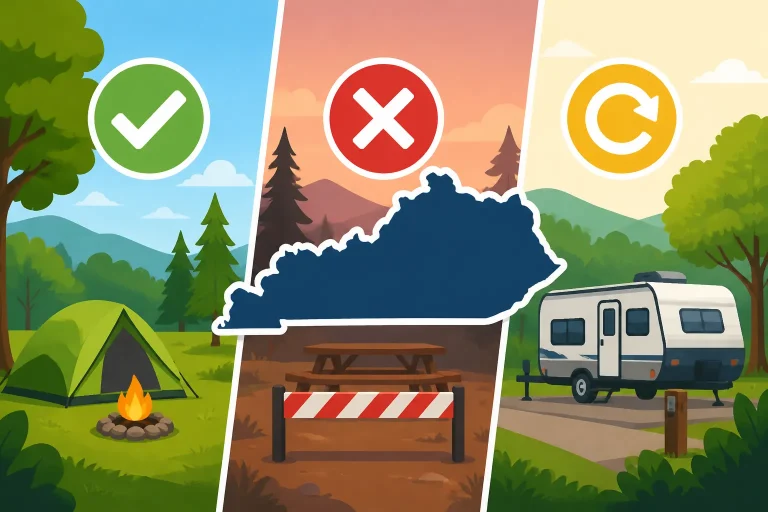
A campground that suits your needs on paper may not be available for your dates. Seasonal schedules, repairs, weather, and changing operating conditions can affect a trip, so verify current information close to your stay. Do not treat an old page, a past visit, or another camper’s report as confirmation that a campground or service is available now.
Before booking, check the current status for the exact campground. If the park publishes operating information, use that source to confirm opening dates, closures, or changes. Then check again before you leave, especially if your trip depends on a campground opening at the start of a season or on a particular facility being available. Which Kentucky State Park Campgrounds Are Open, Closed or Reopening and Spring Opening Dates for Kentucky State Park Campgrounds cover the timing questions that can affect a reservation.
The campground’s overall status and the status of an individual service are not always the same question. A campground may be operating while a facility you expected to use is unavailable or subject to seasonal conditions. Confirm the details that matter for your setup: water, bathhouses, utilities, waste disposal, and any other service you are counting on. For a colder-weather trip, pay close attention to water availability and possible freezing conditions. Off-Season Camping at Kentucky State Parks: Water Isn’t a Given and Frozen Pipes in Late Fall: Call the State Park Before Camping are useful starting points.
Weather can change access and comfort as well. A wet forecast may affect a tent trip differently from an RV stay, and conditions at the campground may change before you arrive. Have a plan for staying warm and dry, but also know where to check for closures or access updates. If severe weather could affect your travel, verify the current status with the park rather than assuming the campground will operate normally.
Fire and food rules are another reason to check the current official information. Restrictions and campground requirements can vary by property and conditions. Do not assume that a previous trip, a neighboring county, or a different campground has the same rule. Check the applicable guidance before you depart and again when you arrive. For more on how to check current fire rules, see Before You Light a Campfire in Kentucky: Where to Check First. For food storage questions, use Bear-Safe Food Storage at Kentucky Campgrounds: The Rules Explained and follow the official instructions for the place where you are staying.
A seasonal amenity can influence which park seems attractive, but only if it will be operating during your visit. Swimming, dining, rentals, and other features may have their own schedules or conditions. Verify each one that is central to your plans rather than relying on a general description of the park. Seasonal Amenities: Timing a Kentucky State Park Trip can help you build that check into your planning.
Keep your expectations flexible. A backup campground or a different site type may preserve the trip if your preferred choice is unavailable, but make sure the alternative fits your equipment and group before you need it. A substitute that lacks a key service may not work for your plans. If a closure affects your reservation, contact the official reservation provider or park using its current contact information and ask what options apply. For more on handling a closure, see If Your Kentucky Campground Closes for Repairs, What Happens Next?.
Use a Simple Decision Process to Narrow the Options
When many parks seem possible, it helps to make the decision in stages. You do not need to rank every campground in Kentucky. Focus on the ones that satisfy your basic needs, then compare the remaining trade-offs.
Begin by naming the trip’s purpose. Is this mainly a tent or RV weekend, a lodge-and-camping stay, a convenient overnight stop, or an outdoor trip where the campground is just the base? Write down what your group considers essential, such as a suitable site type, a specific location, or a service you need. Keep preferences separate from requirements so you can tell which compromises are acceptable.
Next, decide what kind of campground suits your setup. Compare tent, RV, and primitive options using the specific site description. If you are taking a vehicle or trailer, confirm fit and services. If you are pitching a tent, check the site details and nearby facilities. If you are considering a lodge as part of the stay, confirm the lodge and campground arrangements rather than assuming they are connected in the way you expect.
Then narrow by location. Consider the route, the drive your group is willing to make, and how much time you want to spend away from camp. Check access information for the actual campground. If the plan revolves around a particular feature or activity, confirm that the campground is positioned well for it and that the relevant service or facility will be available during your dates.
After that, compare the practical details side by side. A simple worksheet can keep you from choosing based only on a park’s name or a single attractive feature.
| Decision point | Choice that may fit | What can make it a poor fit |
|---|---|---|
| Park setting | A resort park if the lodge and overnight accommodations suit the group | Assuming the campground is beside the lodge or that every service is available to campers |
| Camping style | A primitive site if your group is prepared for a simpler setup | Expecting facilities that the site description does not list |
| RV setup | A site whose exact description fits your vehicle and needs | Assuming all sites in the campground offer the same layout or services |
| Tent setup | A site that matches your tent, gear, and comfort needs | Choosing by park name without checking site access and facilities |
| Trip location | A campground that works for your route and plans | Ignoring drive time or assuming a nearby attraction is convenient |
| Timing | A campground confirmed open for the planned dates | Relying on old information or assuming seasonal services are operating |
| Budget | An option that fits the full trip budget | Comparing only the campsite cost while overlooking other trip expenses |
For each candidate, mark whether it meets your essential needs, whether any important detail is unconfirmed, and what compromise it requires. Remove options that fail a requirement, but do not reject a campground over a preference that your group can live without. The goal is not to find a universally perfect park. It is to choose a workable match for the trip you are actually taking.
Before booking, check availability and current terms through the official reservation system. Recheck the campground status and any essential services before departure. Keep the park’s current contact details accessible in case you need to clarify something or respond to a closure. If you are comparing alternatives, make sure each one is genuinely usable for your equipment and dates—not merely an appealing name on a list.
This approach helps prevent common mismatches: booking a primitive site while expecting developed facilities, choosing an RV site without confirming fit, or selecting a park for an amenity that is seasonal. It also makes it easier to explain the decision to the rest of your group. You can point to the essentials the campground meets, the details you confirmed, and the compromises everyone accepted.
Frequently Asked Questions
Are Kentucky state park campgrounds found across the state?
Yes. The Kentucky Department of Parks describes them as spread out across the state. Compare location and access for the specific campground, since the statewide distribution alone does not tell you which one is convenient for your trip.
Is a resort park a good choice for campers?
It can be, particularly if a lodge with restaurants and overnight accommodations suits your group’s plans. Confirm whether the campground and lodge arrangements work for your visit rather than assuming the services are close together or available to every guest.
Do recreational parks have primitive and RV camping?
Many state recreational parks offer campgrounds with primitive and RV sites, according to the Kentucky Department of Parks. Check the specific park’s current listing because that general description does not establish which site types are available at each campground.
How do I know whether a campground is right for my RV or tent?
Check the exact site description, including site type, fit, listed services, and relevant campground facilities. If any detail essential to your setup is unclear, confirm it with the park or official reservation provider before booking.
What should I check close to departure?
Verify that the campground is operating for your dates and check the status of the services you depend on. Review current conditions and applicable campground rules, then check again before leaving and when you arrive if conditions may have changed.
Sources
- Kentucky State Parks — Activity Stream (checked November 23, 2026)
- Kentucky Department of Parks — FAQs – Kentucky State Parks (checked November 23, 2026)
- Kentucky Department of Parks — Explore Kentucky State Parks and Recreation |Nature's Playground Awaits! (checked November 23, 2026)
- Kentucky Department of Parks — Kentucky State Park Campground Reservations – Book Your Adventure (checked November 23, 2026)
- Kentucky Department of Parks — Camping Adventures in Kentucky State Parks – Camp Under the Stars (checked November 23, 2026)
Disclaimer
This article is for general informational purposes only and does not constitute professional advice. Laws, prices and regulations vary by location and change over time. Consult a qualified professional for guidance on your specific situation. Kentucky Camping & RV is not a government agency and is not affiliated with any government agency.