Kentucky State Park Campground Regulations, Rule by Rule
Kentucky State Park campground rules shape how long you can stay, where you may park, how to manage a campfire and when to keep noise down. The challenge is knowing which requirements are confirmed systemwide and which details need a park-specific check. Here’s how to plan around the established rules without assuming that every campground works the same way.
Start with the rules that apply, then check the campground
A useful campground plan begins with a distinction: some rules come from the Kentucky Department of Parks, while a particular campground may also have instructions that affect how you use its sites and facilities. A general rule is a good starting point, but it does not answer every practical question about your site, vehicle, equipment or arrival.
The confirmed requirements in this article cover length of stay, campfires, quiet time and vehicle parking and passes. They do not settle every question campers might have. For example, campers may still wonder how many vehicles fit at a particular site, whether a certain accessory is permitted, or what a campground’s check-in process looks like. Treat those as details to confirm rather than filling in the gaps with assumptions.
Before leaving, check the official Kentucky State Parks information for your campground and the instructions attached to your reservation, if you have one. If a detail remains unclear, contact the park using the current contact information on its official website. Rules and site arrangements can differ, so check the campground you plan to use rather than relying on a past visit to another park.
This matters especially if your trip involves a large RV, several vehicles, a group, a special cooking setup, a pet, or a late arrival. These arrangements can raise questions that the broad rules do not answer. Confirm the detail before packing or setting out, and keep any written instructions easy to find when you arrive.
For help choosing a campground that fits your plans, see Choosing a Kentucky State Park for Your Camping Trip. If you are unsure which agency sets campground policies, Who Writes the Campground Rules at Kentucky State Parks? can help clarify where to direct your question. And for a fuller view of how statewide requirements fit alongside campground-specific details, use this article as a starting point, not as a substitute for the park’s current instructions.
A practical way to check a rule
When you have a question, frame it around the exact situation you expect at camp. “Can I bring this?” is less useful than asking whether a specific piece of equipment can be used at the site you booked. “Can we park there?” is clearer when you can describe the vehicle and the campsite arrangement.
A quick check can follow this sequence:
- Identify the campground and, if relevant, your assigned or requested site.
- Find the park’s official information and any instructions linked to your stay.
- Look for the rule that applies to your exact activity or equipment.
- If the wording does not answer your question, contact the park before departure.
- Follow current posted instructions at the campground if they provide additional direction.
That approach helps avoid two common mistakes: treating an unconfirmed assumption as a rule, and treating the absence of a detail in a general description as permission. If a campground’s instructions are not clear, ask for clarification rather than guessing.
Stay length and planning a longer visit
A trip that runs longer than a typical weekend needs a little more planning than simply extending the dates. The campground stay limit is a rule to check before building a long itinerary around one campsite.
According to the Kentucky Department of Parks, there is a fourteen (14) day maximum stay unless the park manager grants a waiver for good cause due to an emergency or business necessity.
The waiver is not something to assume will be available for an ordinary extended vacation. If an emergency or business necessity may affect your plans, contact the park manager and ask what information or process applies. Do that before you depend on staying beyond the normal limit. A request is not the same as an approval, so get a clear answer from the park before arranging travel around an extension.
For a longer trip, consider the stay limit while you choose dates and destinations. If your plan involves more than one campground, confirm the requirements at each place instead of assuming the same arrangements apply throughout. Different stops may have different availability and local instructions, even when the general campground rule is the same.
Questions to settle before a longer stay
It helps to know what the stay limit means for your exact itinerary. Check the dates of your intended stay, whether you expect to move between campgrounds, and whether an unusual circumstance could require an extension. If you have a reservation, review its dates and instructions carefully. Do not treat an open-looking calendar or an informal conversation as approval to exceed a limit.
If your trip is flexible, keep an alternative plan in mind. That might mean choosing a shorter visit, changing the route, or identifying another suitable campground for a later segment. This is not a way around a rule; it is a way to avoid being caught with an itinerary that depends on an unconfirmed exception.
The official article Emergency or Business Necessity: The State Park Stay Waiver is relevant if you need to understand the waiver question in more detail. For general help building a route that includes several stops, see Linking Several Kentucky State Parks on One Camping Road Trip. Confirm the current rules and availability with the parks before relying on any multi-stop plan.
Make the stay length part of your booking check
When arranging a stay, verify that the dates fit the applicable limit and that the campground has the site type you need. If there is a special circumstance, raise it with park staff early rather than waiting until the last part of the trip. Keep the answer with your travel information, particularly if your plans involve a change to the original stay.
For planning beyond a single visit, the important habit is to check the campground’s own instructions each time. Do not assume that a stay arrangement at one park establishes what is allowed at another. The statewide limit gives you a boundary; the park can explain how to handle a particular situation.
Parking, vehicle passes and site access
Parking can affect more than convenience. A vehicle left outside an approved space can obstruct access or create uncertainty about whether it belongs with a campsite. Plan where each vehicle will go before arrival, especially if your group is bringing an RV, towing a trailer, or traveling in separate cars.
According to the Kentucky Department of Parks, vehicles must be parked in campsite spaces and parking lots and display a car pass or visitor pass.
This is the confirmed parking and pass requirement. It does not by itself answer how many vehicles a particular campsite can accommodate, whether a vehicle fits within a specific space, or what arrangements apply to a trailer and tow vehicle. Those are site-specific questions. Check the site description and ask the campground if the information does not resolve them.
Do not plan to leave a vehicle along a campground road or in an unmarked area simply because the campsite looks full. If your group has more vehicles than you think will fit, find out where overflow or additional parking is permitted before you travel. The park can clarify whether a designated parking lot is appropriate for your situation.
Match the vehicle to the site
Before confirming a campsite, compare the site’s stated dimensions and features with your actual setup, where those details are available. Consider the full combination you will bring, including a tow vehicle and trailer, rather than measuring only the RV or the car. Make sure you can follow the campground’s parking direction without blocking a road or taking space that is not part of your site.
If you are unsure whether your vehicle combination will fit, ask the park directly. A photograph or measurement can help explain the question, but the park’s current direction is the important part. A listing that appears to show a suitable site may not answer every question about turning, positioning or how the vehicle is expected to be parked.
For more detail about campsite vehicle limits, see Cars, Trucks and RVs: How Many Can Park on a Kentucky Campsite?. If you are choosing between site types, Comparing Kentucky State Park Campgrounds: Sites, Hookups, Costs can help you organize the details to compare. Check the exact campground’s information before making a final plan.
Passes are part of the arrival plan
Know whether your vehicle needs a car pass or visitor pass, and how the campground expects it to be displayed. If your group is arriving in separate vehicles, ask what each driver needs to know. Do not assume that one person’s pass covers every vehicle or that a pass from a previous visit is valid for a new stay.
Keep the pass and any arrival instructions where they can be reached without unpacking the vehicle. If the campground provides instructions for registering or displaying a pass, follow those rather than relying on what happened at another park. For more on guest access, see Visitor Passes at Kentucky State Park Campgrounds: What Guests Need.
A useful predeparture check is to make sure that all drivers know the approved parking location, understand the pass instructions and have the campground’s contact details available. That small bit of coordination can prevent a confusing arrival, particularly if the group reaches the campground in separate vehicles.
Campfires, fire rings and safe decisions
A fire can be part of a campsite routine, but the location and supervision matter. Do not assume that every surface or portable fire setup is acceptable. Start with the campground’s designated fire areas and current instructions.
According to the Kentucky Department of Parks, campground fires are restricted to fire rings in designated areas only and must be attended at all times.
That rule gives campers two important boundaries: use the designated fire ring and do not leave the fire unattended. If you need to step away, arrange for someone to remain with it or put it out before leaving. Do not assume a fire is safe to leave because it is small, nearly burned down or inside a ring.
The fact that a campground has a fire ring does not answer every question about fuel, firewood, grills, portable fire pits or temporary restrictions. Check current instructions before you pack firewood or bring cooking equipment. Conditions and restrictions can change, so check the relevant official information before departure and again when you arrive. Do not rely on an old trip report or a previous season’s conditions.
For the broader firewood and restriction questions, see Firewood Rules at Kentucky State Parks: Receipts and Certified Wood and Campfire Rules at Kentucky State Parks: Rings, Grills and Posted Bans. These can help you identify what to confirm, but the campground’s current directions control your plans.
Before you light anything
Before lighting a fire, check that you are at the designated fire ring for your site or area and that current instructions allow a fire. If there is a posted restriction or park direction, follow it. If you cannot tell whether a particular setup qualifies, do not use it until the park clarifies.
Think through supervision before striking a match. Someone should be able to stay with the fire for as long as it remains lit. If the group plans to leave for a walk, go to a facility, or turn in for the night, make putting the fire out part of the plan. A person who is distracted by cooking, children or campsite tasks may not be able to monitor a fire properly, so choose a responsible person for the job.
A safe campsite routine also includes knowing how you will extinguish the fire and where the park expects ashes or leftover material to go. Do not assume a disposal method; ask if instructions are not posted or clear. Avoid moving hot coals or ashes to another place. The goal is to leave the designated area in the condition the campground requires, not to improvise a new disposal spot.
Fire and cooking are related, but not always the same question
Campers often use “fire” to mean several different things: a campfire in a ring, a charcoal grill, a gas stove, or a portable appliance. The confirmed fire-ring rule does not answer every equipment question. Check the campground’s current instructions for the specific device you intend to use and whether any temporary restriction affects it.
If you are bringing a portable fire pit or another device, ask before the trip rather than deciding at the campsite. The same applies to cooking over a fire ring: confirm the park’s directions and use only the equipment permitted for the situation. Do not infer permission from the fact that an item is sold for camping or that it was accepted at another campground.
For packing and site-preparation help, Packing for a Kentucky State Park Campsite: What the Site Provides can help you distinguish what to bring from what to verify. Use the park’s current guidance for fire-related decisions.
Quiet time and considerate campground behavior
A campground has shared spaces, so sound carries beyond the people who make it. A relaxed evening around a campsite can still disturb nearby campers if voices, music, a television or equipment remain loud after quiet time begins. Knowing the quiet-time start helps you plan the evening before it gets late.
According to the Kentucky Department of Parks, quiet time begins at 11 p.m.
Build your evening around that time rather than waiting until it starts to turn down the volume. Finish noisy tasks earlier, lower music and conversation as the evening progresses, and take care with doors, tailgates and equipment. An RV generator or other powered device may raise a separate question, so check the campground’s rules for equipment rather than assuming the quiet-time rule answers it.
Quiet time is not only about a single sound source. Several small noises together can keep nearby campers awake: a bright conversation, repeated trips between vehicles, a dog barking, or equipment being packed away. Consider how sound travels through a campground, especially when sites are close together or the surroundings are quiet.
If a neighbor is making noise, start with a calm, respectful request when it feels appropriate. If the problem continues or you do not feel comfortable approaching the person, use the park’s current process for getting assistance. Do not turn a disagreement into a confrontation. For the topic of nighttime noise in more detail, see Late-Night Noise Rules at Kentucky State Park Campgrounds.
Set expectations with your group
Quiet-time plans work best when everyone knows them. Let your group know when to wrap up louder activities and where conversations can continue without disturbing others. If children are part of the trip, decide ahead of time how to handle late-night movement between the tent, RV and facilities. Keeping essentials easy to reach can reduce repeated searches and noisy packing after dark.
If you are traveling with a pet, plan for the possibility that unfamiliar sounds or activity may cause barking. Bring what helps your pet settle, and do not wait until a neighbor raises a concern to think through the issue. Pet rules can involve separate requirements, so check the applicable park information and any rules for your lodging or site. The quiet-time fact does not replace those directions.
For any group event, do not assume that a campground’s normal expectations can be set aside. Ask the park whether the planned activity needs approval and how it should be arranged. The relevant resource is Hosting a Group Event at a Kentucky State Park: The Permit Step. A group can have an enjoyable evening while still taking responsibility for noise and the shared setting.
Quiet hours are a good time to simplify campsite tasks
Late-night setup can create unnecessary disruption. If possible, prepare bedding, organize food and locate essential gear before the evening gets late. If you expect to arrive after dark, find out how the campground handles arrivals and whether there are instructions to follow. See Arriving After Dark at a Kentucky Campground: What to Expect for questions worth checking.
Keep in mind that quiet-time guidance is one part of campground etiquette, not a full list of rules about every sound or device. For generators, music, visitors or a specific piece of equipment, confirm the park’s current instructions. When uncertain, choose the quieter option while you wait for clarification.
Campsite setup, facilities and questions the rules do not settle
The confirmed rules above do not answer every question that comes up while setting up camp. They do not specify which equipment is provided at each site, whether a particular shelter or screen room is allowed, how wastewater should be managed, or what facilities are open during a particular visit. Those details can affect comfort and compliance, so verify them directly.
Start with the description of the campground and your site. Look for information about the site type, utilities, water access, restrooms, bathhouses and other facilities that matter to your group. Then check whether the details apply to the exact site or only to the campground generally. If the listing does not say, ask the park before you pack.
What Every Kentucky State Park Campground Has, Water to Bathhouses is useful for understanding the kinds of facility details to check. For equipment, Packing for a Kentucky State Park Campsite: What the Site Provides can help you prepare without assuming that every campground supplies the same things.
Ask about the actual setup, not just the general category
A site labeled for camping may still leave important practical questions unanswered. If you plan to use a screen room, canopy, hammock, extra tent or another piece of gear, verify whether that setup is allowed and where it can be placed. The title Screen Rooms and Canopies on a Kentucky State Park Campsite may help you identify what to ask. For hammocks, see Checking Hammock Rules Before Camping at a Kentucky State Park.
If your setup includes more than one camping unit, confirm the arrangement before arrival. Do not assume that the available ground around a site is automatically part of your campsite or that a second unit can be placed wherever it fits. The campground can explain which space belongs to the site and what its current requirements allow.
Consider accessibility and movement around the site as well. If anyone in your group has mobility needs, ask about the route from the parking space to the facilities and whether the particular site meets your needs. Asking for an Accessible Campsite at a Kentucky State Park offers a focused set of issues to raise. An accessible label or a general campground description may not answer every question about the exact route, surface or arrangement.
Find out how shared facilities may affect your plans
Facilities influence how much equipment you need to bring and how you schedule meals, washing and cleanup. Confirm whether the campground has the facilities you expect and whether they are available during your trip. Availability can be seasonal or affected by maintenance, so use current information rather than assuming a service will be open because it was available on a previous visit.
If you expect to use a dump station, water source, laundry area or campground store, verify its location and availability with the park. Ask about disposal and cleanup procedures rather than improvising. Where to Find RV Dump Stations Across Kentucky’s Public Campgrounds can help identify the type of information to seek, while the specific campground should confirm its current setup.
Waste, dishwater and food storage can have separate requirements. The four rules covered here do not establish what to do with every kind of waste or leftover food. Check the campground’s instructions, use the facilities as directed and keep the site orderly. If you are unsure where something belongs, ask before disposing of it.
Leave room for changing conditions
A site description cannot guarantee that every facility or service will be available throughout a visit. Weather, repairs and seasonal operation can affect what campers can use. Before departure, check for current closure or service notices, particularly if your trip depends on a specific facility. Weather Closures at Kentucky State Parks: Checking Before You Drive can help you build that check into your travel routine.
It is sensible to have a backup for essentials. If the campground store is not available, for instance, you may need to bring the supplies you depend on. If water access is important, check the status before setting out. This is practical preparation, not a claim that any particular campground lacks a service.
Arrival, departure and handling uncertain rules
A smooth stay depends on understanding the campground’s instructions before you reach the entrance. Review your reservation details, directions and any messages from the park. Make sure each driver knows where to go, where to park and what pass information applies. If you expect to arrive late, ask about the arrival process in advance instead of assuming that the usual check-in routine will work.
At the campground, read posted signs and follow current staff directions. If a posted instruction seems to differ from information you saw earlier, ask the park to clarify. Do not rely on a screenshot or old description when the park has provided a newer direction. Keeping notes about who provided an answer and what situation it covered can help your group follow the same plan.
For timing, see Check-In and Check-Out Times at Kentucky State Park Campgrounds. If you are uncertain about how to register or where to go on arrival, Registering at the Gate When You Arrive at a Kentucky Campground covers the kind of detail to verify. These resources are starting points; the campground’s current instructions should guide your visit.
If a rule is unclear
Some questions are easy to resolve by checking the park’s official information. Others require a direct answer because the rule depends on the campsite, equipment or circumstances. When contacting the park, state the campground, your dates, the site or booking details if applicable, and exactly what you plan to do. A specific question is more likely to get a useful answer than a broad request to explain all campground rules.
Ask for clarification before you act when the consequence could be a parking problem, an unsafe fire setup, a disturbance to other campers or a stay that depends on an exception. If an answer is not clear, ask a follow-up question. Do not interpret silence, a missing website detail or another camper’s practice as permission.
If the question concerns a possible violation or a dispute, stay calm and use the park’s current process for assistance. Avoid trying to enforce rules yourself. The park staff can explain the appropriate next step and what information they need.
Build a compact pre-trip checklist
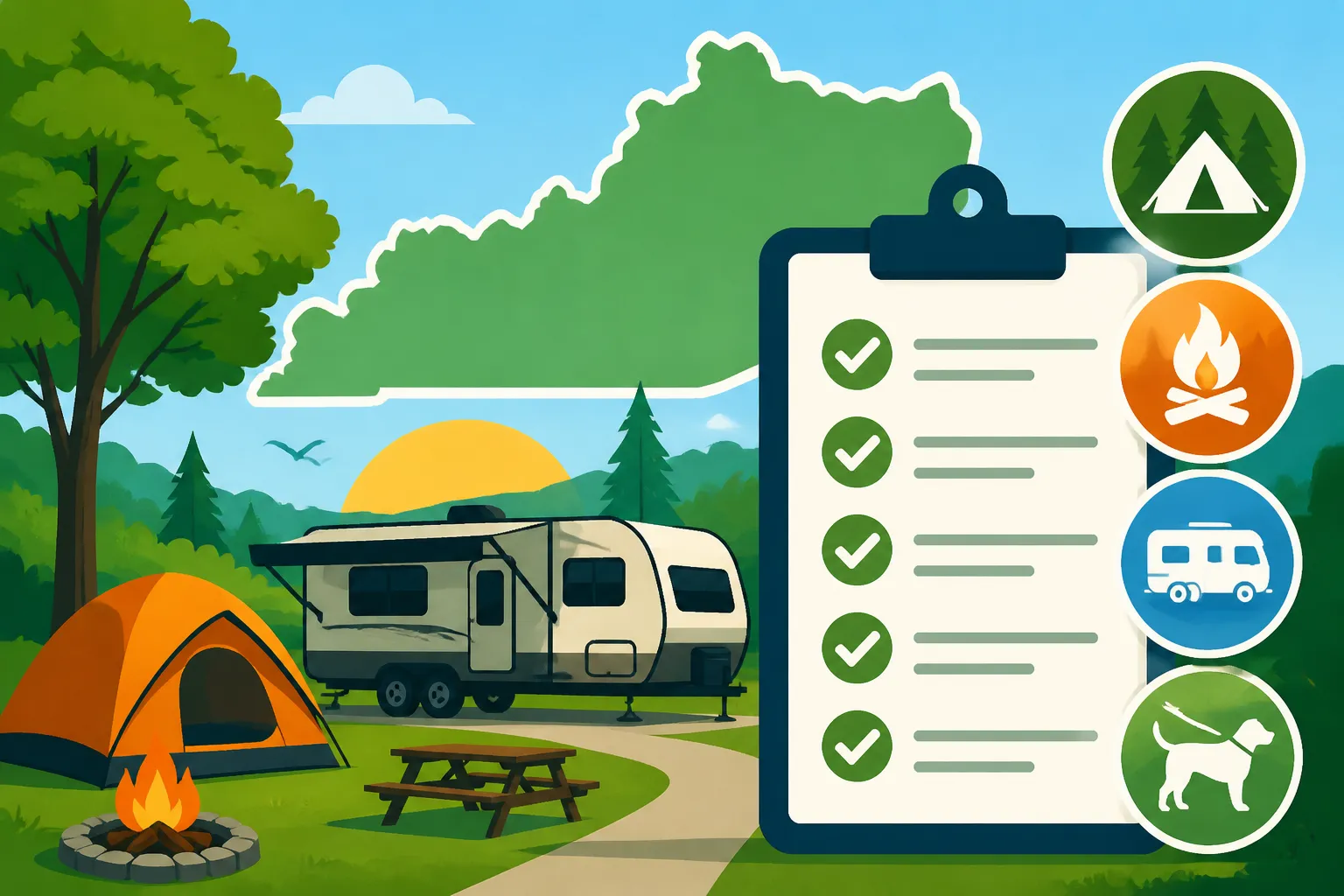
A short checklist can keep the four confirmed rules and the important unknowns in view:
- Confirm that your planned length of stay fits the applicable limit, and ask about a waiver if an emergency or business necessity may apply.
- Confirm where your vehicles should be parked and what pass each vehicle needs.
- Check the current fire instructions, including which area is designated and whether any temporary restriction applies.
- Plan evening activities around quiet time and check separate instructions for equipment that may make noise.
- Verify whether your site and campground have the facilities and space your group needs.
- Ask about any gear, extra vehicle, pet, group activity or accessibility need that is not answered by the park’s current information.
- Save the official instructions and current contact details for the campground.
Use this as a prompt, not as a complete rulebook. Add the questions that matter to your trip. An RV traveler may need to confirm the exact site dimensions and hookups; a tent camper may need to check the site surface and nearby facilities; a group may need to clarify parking and event arrangements.
Make the rules part of a comfortable stay
Following campground rules is not only a way to avoid a problem. It helps preserve access, safety and a reasonable amount of quiet for everyone staying nearby. Parking in the right place, using only the designated fire area, supervising a fire and lowering noise at the stated time are straightforward habits once they are part of the plan.
At the same time, do not overread a short list of confirmed rules. If you have a question about pets, visitors, gear, wastewater, a special event, site access or another activity, look for the specific instruction or ask the park. The most reliable plan combines the statewide requirements with current information for the campground you will actually use.
Frequently Asked Questions
Can a stay be extended beyond the campground limit?
An extension is not automatic. If an emergency or business necessity is involved, ask the park manager whether a waiver may apply and wait for clear approval before changing your plans.
Can I use a portable fire pit at my campsite?
The confirmed campground fire rule identifies designated fire rings. It does not settle whether a portable fire pit is allowed, so check the current instructions for your campground before bringing or using one.
Where should I park an extra vehicle?
Use the parking locations the park permits and ask the campground where an additional vehicle should go. Do not assume that the roadside or unmarked space beside a campsite is approved parking.
What should I do if a campground rule is not posted or clear?
Check the park’s official information and contact the campground with a specific question. Until you have a clear answer, avoid assuming that an activity is permitted.
Sources
- Kentucky Department of Parks — Campground Regulations – Kentucky State Parks (checked November 23, 2026)
Disclaimer
This article is for general informational purposes only and does not constitute professional advice. Laws, prices and regulations vary by location and change over time. Consult a qualified professional for guidance on your specific situation. Kentucky Camping & RV is not a government agency and is not affiliated with any government agency.