Do All Kentucky Resort Parks Have a Campground Next to the Lodge?
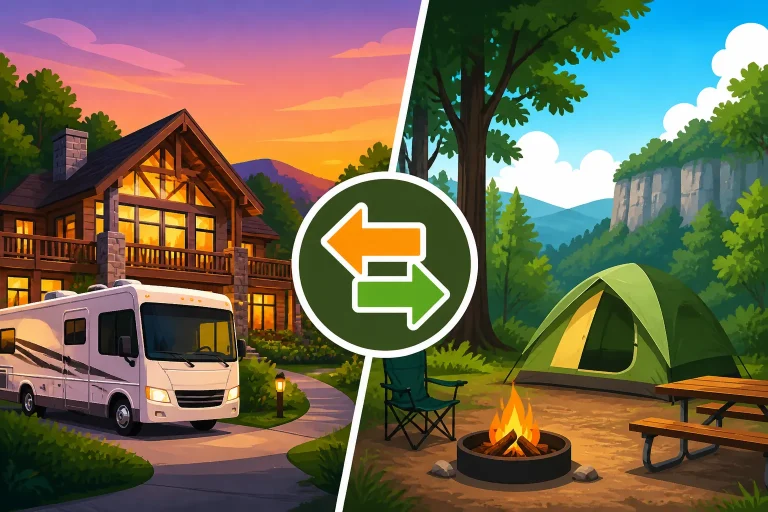
Kentucky’s resort parks combine lodge stays and camping, but that does not tell you whether a campground sits beside a particular lodge. If you want to stay near family in a lodge, walk between lodging and a campsite, or keep a vehicle close, confirm the layout at the specific park before choosing dates or making a booking.
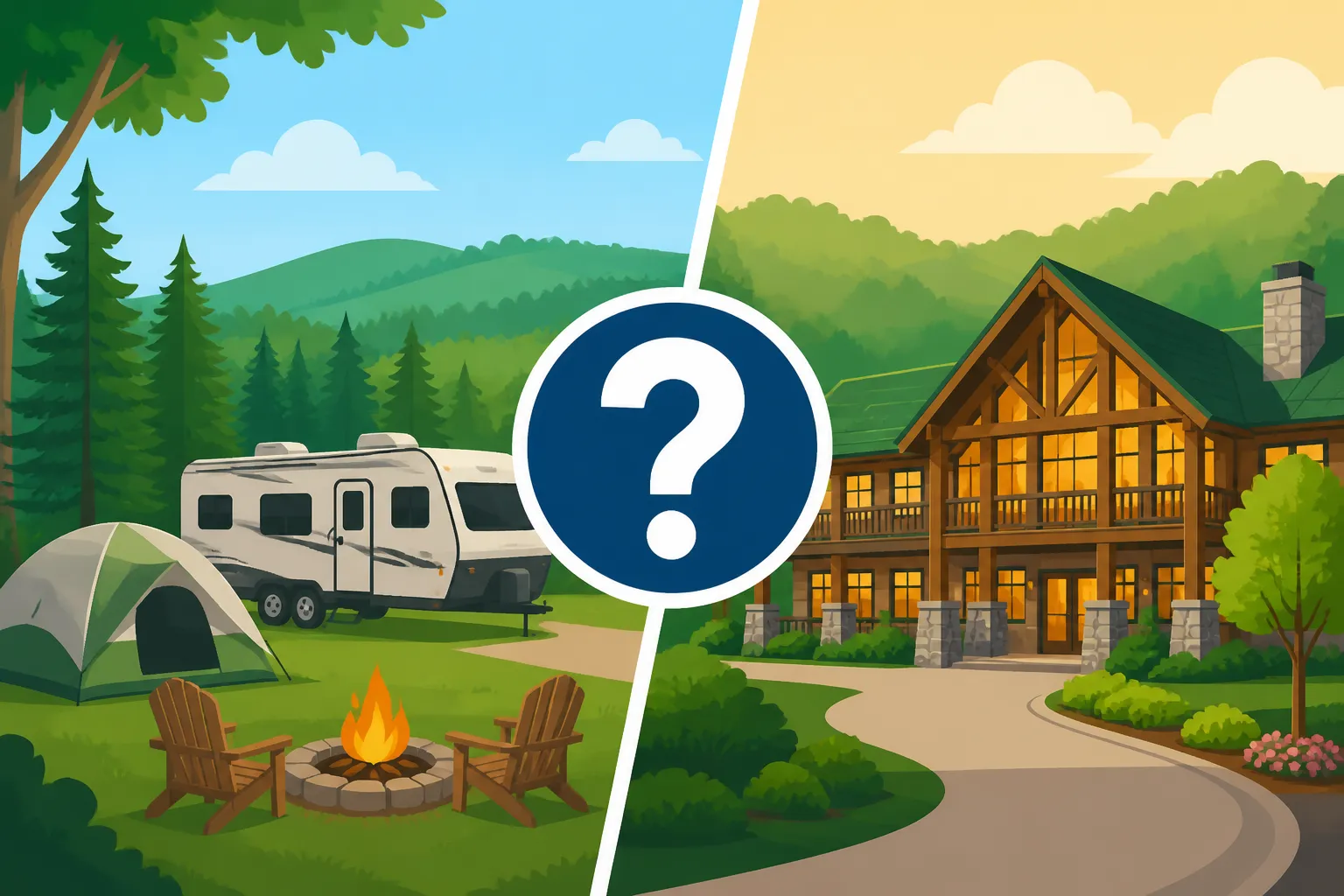
Do Kentucky resort parks have campgrounds next to their lodges?
Not necessarily. The available information establishes that resort parks offer both lodging and camping, but it does not establish that every campground is next to its park’s lodge. “Next to” can also mean different things to different visitors: a site in the same general park area, a short drive away, or an easy walk from the lodge.
The Kentucky Department of Parks states that Campsites are also available at the resort parks. It also says Kentucky State Resort Parks also offer lodges with hotel-style rooms and campgrounds. Those statements confirm that both types of stay are offered across the resort-park system; they do not specify how close a campground is to a lodge at any individual property.
That distinction matters when a trip depends on people staying in different kinds of accommodation. A family might picture a tent site just outside the lodge, while the actual arrangement could involve separate parts of the park. If a walkable connection is important, do not rely on the fact that a resort park has both a lodge and a campground. Verify the route and distance for the exact property.
There are several practical reasons a park may have both accommodations without placing them side by side. Lodging and campsites serve different needs, and the park’s layout, roads, terrain, and facilities may shape where each is located. Unless the park’s official information makes the relationship clear, treat campground and lodge availability as two separate options rather than assuming one is adjacent to the other.
A useful starting point is to decide what you mean by “next to.” Consider whether you need:
- A short walk between the campsite and lodge.
- A route that avoids driving on park roads.
- A nearby place to meet for meals or activities.
- A campsite close enough for someone to return easily to their room.
- A driveable connection that works for your group.
Those needs are not interchangeable. A campground can be within the same park but still be inconvenient for someone who cannot manage a long walk or who expects to go back and forth several times. On the other hand, a short drive may be perfectly workable for a group that plans to spend most of its time together elsewhere.
For the broader differences between resort parks and other park types, see What Makes a Kentucky Park a State Resort Park? and Lodge Comforts or a Simple Campsite? Picking Your State Park Type. The main takeaway is simple: confirm the specific layout, not just the park’s general mix of accommodations.
How to check the layout before you book
Start with the official information for the property you are considering. Look for separate descriptions of its lodge and campground, and check whether a map shows both. A map can help you understand the general arrangement, but it may not answer whether a route is comfortable on foot or whether visitors can use a particular entrance. If the information is unclear, contact the property using current contact details from its official website.
Ask a direct question rather than relying on a broad description such as “the park has a campground.” For example: “Is the campground within walking distance of the lodge, and what is the route like?” That wording invites a useful answer about the relationship between the two areas. If your group has accessibility needs, ask about the route’s surface, slope, crossings, and available parking instead of assuming that a short map distance means an easy walk.
Before reserving, check the details that affect your group’s plan:
- Which campground and lodge are being discussed? A property may list more than one accommodation area. Make sure the answer refers to the exact option you intend to book.
- How does the group travel between them? Ask whether visitors generally walk, drive, or use another arrangement. Do not assume a shuttle or other service exists unless the property confirms it.
- Where would you meet? If some guests are camping and others are in lodge rooms, identify a practical meeting point rather than assuming that either accommodation is a natural gathering place.
- What does the route involve? Ask whether it follows a road, walkway, or another route, and whether the route suits your group’s mobility needs.
- Are the relevant facilities available for your dates? Confirm the status of the specific campground and lodge directly through official property information before you make plans.
A site map can be useful, but interpret it cautiously. A line on a map may show relative location without showing a comfortable walking route, and an aerial view may not make slopes, traffic, or access restrictions obvious. Treat the map as a planning aid, then verify any important detail with the property.
Also distinguish distance from convenience. A campsite may look close to a lodge but require a longer route than expected. A lodge and campground may share the same park name but have separate access points or areas. If your group includes young children, older adults, or anyone who needs a particular level of access, those details can matter more than the straight-line distance.
If you are choosing among properties, compare them using the same questions each time. That makes it easier to spot a genuine difference instead of comparing a detailed answer from one park with a vague description from another. For help selecting a property around the trip itself, see Choosing a Kentucky State Park for Your Camping Trip.
Choosing between a lodge stay, a campsite, or both
The right arrangement depends on how your group wants to spend the trip. A lodge room and a campsite offer different styles of stay; the fact that a park offers both does not make either one the better fit for every visitor.
A lodge is worth considering when your group wants hotel-style accommodation. A campsite may suit visitors who want to camp. If different members of the group prefer different arrangements, a mixed stay could work, provided the campground and lodge are close enough for your needs and the relevant accommodation is available.
| Arrangement | May suit you if | What to confirm |
|---|---|---|
| Lodge only | Your group wants a hotel-style room and does not need a campsite | Room details, access, and any property-specific conditions |
| Campsite only | Your group wants to camp and does not need lodge accommodation | The specific site type, what the site provides, and the campground’s current status |
| Lodge and campsite | Different members of your group prefer different types of stay | Whether both options are available for your dates and how people will travel between them |
A mixed stay can be useful for a family or group with varied preferences, but it creates a coordination question: where will everyone gather, and how will they move between accommodations? If the campground is not next to the lodge, the group may need to plan around driving, parking, or walking. Make that decision before booking rather than treating proximity as a minor detail to sort out later.
Think about how often the group expects to travel between the two areas. If lodge guests will return to their rooms repeatedly while campers remain at the campground, location may be a priority. If everyone expects to spend the day together and only return to separate accommodations at night, a driveable connection may be enough. The same property layout can work well for one group and poorly for another.
If your goal is to keep the group together, consider whether everyone needs to stay in the same kind of accommodation. One option may simplify meals and meetups; another may better match each person’s comfort and camping preferences. Discuss those trade-offs before deciding that the group must split between a lodge and campground.
For visitors who are still weighing accommodation types, Cabins, Cottages and Lodge Rooms in Kentucky State Parks, Explained can help clarify lodging options. For campground choices, Tent, RV and Primitive Campgrounds Across Kentucky’s State Parks offers a useful comparison of camping styles. Those options are not a substitute for checking the specific property’s layout, but they can help narrow down what to ask about.
Planning a group trip when people stay in different areas
When one group uses both the campground and lodge, make a simple plan for arriving, meeting, and getting around. This avoids leaving a key detail to chance, especially if the group has different arrival times or mobility needs.
Choose a meeting point that everyone can find. It might be an agreed public area, but confirm that it is available and suitable for your group. Do not assume a lodge lobby, campground service building, or other facility is open to every visitor or works as a group gathering space. If you plan to eat together, check the property’s dining arrangements separately rather than assuming lodge guests and campers will use the same facilities.
Make sure each part of the group knows which accommodation it is using and how to get there. Share the property’s official directions and any confirmed information about the route between the lodge and campground. If people will drive between areas, agree on where vehicles can be left and how the group will reconnect. Confirm parking arrangements with the property instead of assuming that a campsite or lodge booking covers every vehicle or every location.
For guests who will arrive independently, clarify where they should check in and what to do if they arrive at different times. The lodge and campground may have separate arrival procedures, so verify the details for each reservation. If the group is booking more than one type of accommodation, keep the confirmation information organized and make sure each person has the details relevant to their stay.
It can also help to plan for a change in conditions. Weather, temporary closures, or other operational changes can affect routes and facilities. Check official property information before travel and follow any current instructions provided by the park. If proximity is essential to your plans, ask whether the arrangement you confirmed is still suitable before setting out.
For a larger group, start with the people who have the tightest requirements. Someone who needs an accessible route, a particular sleeping arrangement, or minimal travel between accommodations may determine which property works. Once those needs are clear, the rest of the group can decide whether a mixed lodge-and-campsite stay is practical.
You can also reduce confusion by writing down the answers you receive. Record which campground and lodge were discussed, the recommended route, and any limits on access or parking. If you later change accommodation choices, confirm that the new option still matches the information. A detail about one campsite or room should not be assumed to apply to another.
For additional planning help, see Family Reunions at Kentucky Resort Parks: Lodge, Cottages, Campsites or Camping While Relatives Stay in the Lodge at a Kentucky Resort Park. The key is to plan around the actual property layout and your group’s travel needs, not just the shared resort-park name.
Common assumptions to avoid
The most important assumption to avoid is that a lodge and campground are adjacent because a resort park offers both. The system-wide information confirms those accommodation types are offered, but it does not promise a particular distance or route at each property.
Other assumptions can create similar problems:
- “Same park” means “easy to walk between.” A shared park location does not establish the route, distance, or accessibility.
- A map settles every question. Maps can show general placement but may not explain the route a visitor can use or how comfortable it is.
- The nearest campground is the one you intend to book. Confirm the exact campground or site option, especially if the property describes more than one area.
- A group can use any lodge space as a meeting area. Ask the property which spaces are available to your party.
- A short drive is automatically convenient. Consider parking, how often people will travel, and whether everyone can manage the arrangement.
- Availability means the whole plan is available. Check the lodge and campground separately for the dates you want.
The safest approach is to make proximity a specific booking question. If a park confirms that the campground is close enough for your needs, keep that information with your plans. If the answer is uncertain, choose a property or accommodation arrangement that does not depend on an unverified walk between areas.
Before you finalize a trip, use a short checklist:
- Identify the exact lodge and campground.
- Confirm that each is available for the dates you are considering.
- Ask how far apart they are and what route connects them.
- Check whether that route works for everyone in your group.
- Confirm parking and meeting arrangements.
- Recheck official property information before departure.
This approach helps whether you are planning a solo camping trip, a family visit, or a group with lodge guests and campers. Kentucky resort parks offer both lodging and camping options, but the best match comes from checking the details of the individual property.
Frequently Asked Questions
Does every Kentucky resort park have a campground beside its lodge?
The available information confirms that resort parks offer lodges and campgrounds, but it does not establish that every campground is beside its lodge. Ask the specific property about distance and access.
Can a group book both lodge rooms and campsites?
A mixed stay may be an option, but check availability for each accommodation type separately and confirm how the areas connect before making plans.
Is a map enough to tell whether the campground is walkable from the lodge?
A map can show general placement, but it may not explain the route or whether it suits your group. Verify walking access with the property if it matters.
What should I ask if someone in my group has mobility needs?
Ask about the route between the specific lodge and campground, including its surface, slope, crossings, and nearby parking. Confirm that the arrangement works for that person before booking.
Sources
- Kentucky Department of Parks — Reserve a Lodge or Cottage (checked November 23, 2026)
- Kentucky Department of Parks — Kentucky State Park Cabin Rentals (checked November 23, 2026)
Disclaimer
This article is for general informational purposes only and does not constitute professional advice. Laws, prices and regulations vary by location and change over time. Consult a qualified professional for guidance on your specific situation. Kentucky Camping & RV is not a government agency and is not affiliated with any government agency.