Tent, RV and Primitive Campgrounds Across Kentucky’s State Parks
Kentucky state park camping can mean a tent site, an RV site or a more basic primitive stay, and those options are not interchangeable. The challenge is finding a campground and site that fit your equipment, comfort needs and trip plans. Here’s how to compare them, what to confirm before booking, and how to avoid choosing a site that won’t work when you arrive.
How campground types differ
Kentucky State Park campgrounds are spread out across the state. According to the Kentucky Department of Parks, many state recreational parks offer campgrounds with primitive and RV sites. That variety is useful, but a campground’s general description doesn’t tell you everything about an individual site. Before you settle on a park, check what kind of site is available and what it actually provides.
The main categories are a helpful starting point:
| Site type | Often suits | What to verify before booking |
|---|---|---|
| Tent site | Campers bringing a tent and basic equipment | Whether the site permits tent camping, the surface and layout, vehicle access, and nearby facilities |
| RV site | Campers arriving in a motorhome, camper or trailer | The exact hookups, parking layout, site dimensions, access and any vehicle restrictions |
| Primitive site | Campers comfortable with fewer developed services | What facilities are absent, how far you may need to carry gear, and how water and waste are handled |
| Multi-use or unclear listing | Campers whose setup needs a specific arrangement | Whether your exact equipment is allowed and whether the site is suitable for it |
These categories can overlap. A campground may have a mix of site types, while an individual campsite may be intended for one kind of setup or have limits that matter to another. A tent can sometimes fit on a site advertised for RVs, but that doesn’t mean the site is designed for a tent-focused stay. A camper should confirm the site’s permitted use rather than assuming that an open-looking pad works for any equipment.
“Primitive” is especially important to interpret carefully. It signals a more basic camping arrangement, not a guaranteed package of amenities. The word alone doesn’t establish whether there is potable water, a nearby restroom, a table, a fire ring or a convenient vehicle pull-in. Those details vary by location and site. Confirm them through the official park information before you plan around them.
Likewise, “RV site” doesn’t automatically mean full hookups or a particular utility setup. The term identifies a site intended to accommodate an RV, but the listing for that specific site is what matters. If electricity, water or sewer service is essential, check each one individually. A general campground description may cover several kinds of sites, and a feature available somewhere in the campground may not be available at the site you select.
A useful way to think about the categories is as a match between your equipment and the setting:
- A tent site should let you pitch and use your tent without relying on an assumption about the ground, layout or permitted site use.
- An RV site should accommodate the vehicle or trailer you plan to bring, with the utility connections you actually need.
- A primitive site should fit your comfort level and your ability to manage without facilities that may be available elsewhere.
- A site description that leaves a key detail unclear is a reason to check, not a reason to guess.
If you’re weighing one park against another, start with Choosing a Kentucky State Park for Your Camping Trip. For a broader look at how improved and primitive choices differ, see Improved Sites vs. Primitive Sites at Kentucky State Park Campgrounds. Those comparisons can help you narrow the list, but you’ll still need to confirm the exact site and current campground details.
Choosing a tent campground
Tent camping depends on the shape and condition of the site as much as the campground’s general category. A tent may fit on a level pad, a grassy area or another surface, but the listing and the park’s current directions should guide your expectations. Don’t assume that every campsite has the same ground, privacy, shade or distance from the parking area.
Start by considering the tent itself and how you camp. A small tent and a larger family tent can have very different space needs. Add room for a vestibule, gear, a screen shelter or another structure only if the park allows the arrangement and the campsite can accommodate it. If you expect to pitch on grass rather than a designated surface, check whether that is allowed at the campground. Pitching a Tent on the Grass at a Kentucky State Park Campground covers why that detail is worth confirming.
Next, consider how you’ll get gear from the vehicle to the tent. Some sites may be convenient for unloading; others may require you to carry equipment farther. The word “primitive” doesn’t tell you the walking distance or the route. Look for a site description or campground map, and ask the park if access is a deciding factor. If you’re bringing a cooler, water containers, sleeping gear and cooking supplies, the distance between parking and tent space can change the whole experience.
Think through the equipment footprint, not just the tent floor. A campsite may need to accommodate sleeping space, a place to sit, cooking equipment and dry storage. The campground’s rules may also limit where shelters, canopies or other structures can go. If you plan to use a screen room or canopy, check the details in Screen Rooms and Canopies on a Kentucky State Park Campsite before packing it.
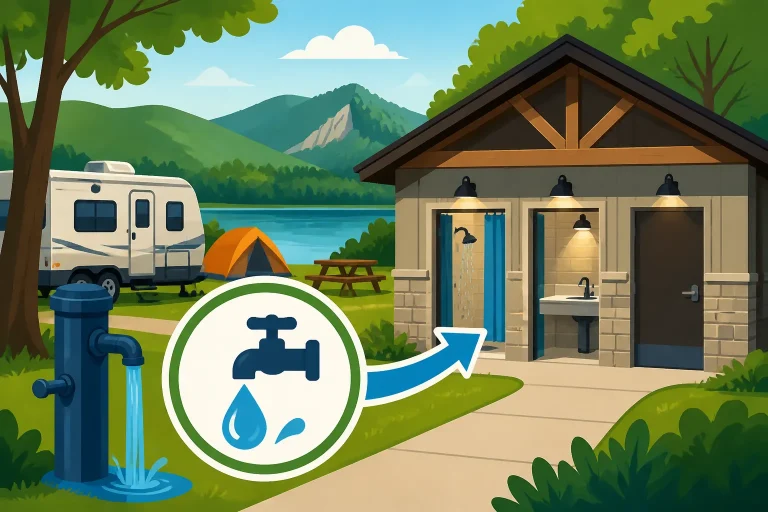
Facilities are another major part of the decision. A nearby bathhouse can be convenient, but don’t treat a campground-wide amenity as proof that it is next to your site or open during your visit. Confirm the restroom and water arrangements for the campground and the relevant season. If shower access matters, Are There Showers at Kentucky State Park Campgrounds? can help you identify the questions to ask. For a more complete facility overview, see What Every Kentucky State Park Campground Has, Water to Bathhouses.
Noise, lighting and campground layout can affect tent comfort. A site near a service area, road or busy gathering place may feel different from one in a quieter section. The park’s map and site description may help you understand the layout, but descriptions can’t always capture how a particular location will feel during a busy period. If quiet is a priority, ask about the site’s position instead of relying only on a campground name or broad label.
Weather readiness is part of tent-site selection too. Consider whether your equipment can handle a wet or windy night and how you’ll keep bedding and clothing dry. Don’t count on a particular amount of natural shelter unless the park information supports that expectation. If the site is exposed, your tent setup and packing choices become more important. For a rainy-trip plan, When Rain Floods Your Kentucky State Park Tent Site explains why site drainage and changing conditions deserve attention.
Finally, match the campground to your experience and comfort level. A first-time camper may prefer a developed campground with facilities nearby, while someone seeking a simpler stay may be comfortable with fewer services. Neither choice is automatically better. The right one depends on what you’re prepared to carry, how you plan to cook and wash, and how much convenience you want at camp. If you’re new to tent camping, Tent Camping for Beginners at Kentucky State Parks: Site Basics offers another useful starting point.
Choosing an RV campground and site
For RV camping, the most important question is not just whether a campground allows RVs. It is whether the specific site fits your vehicle and the services you need. A campground can contain different site types, and a broad label may not describe the available utility connections or layout of every site.
Begin with your full setup. Include the RV or trailer and any vehicle you’ll use with it. Think about the space needed to park, turn, level and access doors or storage compartments. If you tow, consider where the tow vehicle will go once you’re settled. Confirm the park’s current requirements for vehicle size and site use rather than treating a campground’s general RV description as a guarantee. Do Kentucky State Parks Set a Maximum RV Length for Campsites? explains why dimensions are worth checking before you choose.
Hookups need close attention. “RV site” by itself doesn’t confirm electricity, water or sewer at the particular site. Check the listed connections individually and make sure they match your rig and travel plans. If you need an electric connection, verify the type of service and the compatibility of your equipment with the site listing. If you plan to use a dump station instead of a sewer connection, confirm that the campground has one and that it will be available during your stay. For a detailed comparison, see Electric, Water, Sewer: What a Kentucky State Park RV Site Includes and Dump Station or Sewer Hookup? How Kentucky State Park Sites Differ.
A site’s layout matters as much as its services. A pull-through arrangement can be easier for some rigs, while a back-in site may suit other travelers. Neither is automatically the right choice. Check the site map or listing for orientation and access, and ask about anything the description doesn’t make clear. Don’t infer that a site is a pull-through because a campground has some pull-through sites elsewhere. Pull-Through or Back-In? Asking About Kentucky State Park RV Sites is a helpful companion when that detail affects your choice.
Consider the approach to the campground, too. Narrow turns, slopes or tight campground loops can make arrival more demanding, particularly for a larger vehicle or a driver unfamiliar with the park. Look for official driving information and follow the park’s directions. If the route or loop layout is unclear, ask before setting out. Driving a Rental RV Through Tight Kentucky Campground Loops addresses the kind of access question worth raising in advance.
Your camping style can affect which RV site is the better fit. A traveler who spends most of the day away may care most about reliable access and a suitable place to park. Someone spending more time at camp may also want room to sit outside, reach the RV comfortably and manage meals. Check the site’s listed layout instead of assuming that every RV space offers the same usable area.
Power needs deserve practical planning. Confirm that the site’s connection matches the equipment you intend to run, and bring the proper adapter if needed. Don’t assume a campground has the same service at every site. Bringing the Right Electric Adapter to a Kentucky Park RV Site can help you prepare once you’ve confirmed the electrical details.
Water and wastewater plans should be just as specific. Find out where you’ll fill your fresh-water tank and where you can dispose of wastewater, using the campground’s official information. Don’t drain wastewater onto the ground or assume a site has sewer service. If the RV has a cassette toilet or another system with distinct disposal needs, confirm an appropriate option before your trip. See Where to Find RV Dump Stations Across Kentucky’s Public Campgrounds for broader context on locating facilities.
If you’re deciding between an RV and a cottage or cabin, compare what each option requires from you. An RV provides a familiar space and the freedom to bring your own setup, but it also means managing parking, power, water and waste. A rental removes some of those equipment demands, but brings a different set of booking and packing considerations. Bringing the RV or Renting a Cottage at a Kentucky Resort Park can help you weigh those trade-offs.
What to expect from primitive camping
Primitive camping can be appealing if you want a simpler setup or are comfortable being more self-sufficient. The trade-off is that the word “primitive” does not tell you precisely what the campground provides. Treat it as a signal to investigate facilities and access, not as a complete description.
Before booking, look for clear answers to these questions:
- Is the site intended for tents, RVs or another type of setup?
- Can you park at the site, or will you carry your gear from another area?
- Where is the nearest restroom, and what kind of facility is available?
- Is drinking water available in the campground, and where?
- What cooking arrangements are permitted?
- What should you know about wastewater and trash?
- Is there a table, fire ring or other feature at the individual site?
- Are there seasonal closures or changes to facilities?
If you can’t find an answer online, ask the park through its official contact channel. Don’t plan around a feature simply because you’ve seen it at another campground. Facilities can differ between parks and between sections of the same campground.
A primitive stay also takes more planning before departure. Make a list of the items you’ll need if basic services aren’t close at hand: drinking water, lighting, food storage, cooking equipment, weather protection and a way to manage your gear. The exact list depends on the site’s facilities and your group’s needs. Confirming those details can keep you from bringing too little or hauling equipment that the site won’t accommodate.
Pay particular attention to how you’ll handle water. A campground description may not say whether water is at the campsite, elsewhere in the campground or unavailable during a certain period. Find the current official information and plan around what it confirms. If you’ll need to fill containers, check where that can be done and whether the access arrangement works with your equipment and mobility needs.
Waste management requires the same care. Confirm where trash belongs and how to handle wastewater, dishwater and toilet waste. Don’t assume that a primitive site has a dumpster, a disposal point or a specific type of toilet nearby. Follow the posted campground rules and use only the disposal facilities identified by the park.
The word “primitive” does not automatically mean remote or backcountry. A basic campground site can still be part of a developed park setting, but the degree of convenience and the distance to facilities vary. If you want a site that is close to a trail, lake or other feature, confirm access and the route rather than relying on a general park map alone. For campers considering overnight stays beyond a campground, Where You May Camp in a Kentucky State Park Besides the Campground covers why location and authorization need to be checked separately.
Primitive camping can be a poor fit when a member of your group needs dependable nearby facilities, when your equipment is difficult to carry, or when you’re not prepared to manage water and waste independently. That doesn’t mean you need to avoid it. It means you should match the site to the people coming along and the help or facilities they need. If accessibility matters, ask the park about the actual route, surface and available facilities for the specific site.
Match the campground to your trip
A campground decision is easier when you define what the trip needs before browsing sites. Start with the people and equipment, then consider what you want to do while you’re there. A lakeside trip, a quiet overnight or a longer stay may call for different priorities even when the tent or RV is the same.
Use a short planning sequence:
- List your equipment. Note the tent size, RV or trailer, tow vehicle, cooking gear and any shelter you plan to bring.
- Identify essentials. Decide whether you need electrical service, water access, a shower, a particular restroom arrangement or a drive-up site.
- Choose a comfort level. Be realistic about carrying gear, washing dishes, storing food and managing without nearby facilities.
- Check the individual site. Confirm the site type, hookups, layout, access and permitted equipment.
- Compare the campground to your activities. Check distances and routes to the places you intend to visit rather than assuming they are next to your campsite.
- Recheck details before travel. Look for current notices about closures, facility changes and access conditions.
This process prevents a common mismatch: choosing by park name first and solving the site details later. A park may be a good destination, but the available campground or site may not suit your equipment or needs. If the exact site is the deciding factor, compare listings before choosing the park.
Trip timing also affects what is available. Campground operations and amenities can be seasonal, and a site’s facilities may not be the same throughout the year. Verify the operating status of the campground and any service you rely on for the dates you plan to visit. Seasonal Amenities: Timing a Kentucky State Park Trip and Which Kentucky State Park Campgrounds Are Open, Closed or Reopening can help frame those checks.
For a trip built around a lake, check the relationship between the campground and the water. A park’s name or lake setting doesn’t establish that a particular campsite is waterfront, nor does it confirm an easy route to a launch or shoreline. If water access is central to your plans, investigate the location and allowed activities. Lake Camping in Kentucky State Parks: Waterfront and Paddle-In Sites looks at those distinctions.
If you’re choosing among parks across the state, weigh drive time and the rhythm of the trip alongside site features. A campground that looks ideal on paper may involve a longer drive or a less convenient route for your group. On a multi-stop trip, think about how much gear you’ll need to pack and set up repeatedly. Mapping Kentucky’s State Park Campgrounds From East to West can help with the wider geographic picture, while Linking Several Kentucky State Parks on One Camping Road Trip is useful if you’re considering multiple stops.
Your budget also depends on more than the site label. The cost can vary by campground and site features, so compare the exact listing and check current official rates before you commit. Don’t assume a primitive site is free or that every RV site costs the same. For help comparing the variables, see Budgeting a Kentucky State Park Camping Weekend and Finding Current Rates for a Specific Kentucky State Park.
Confirm the details before you book
Once you have a likely campground, slow down and verify the individual site. A campground overview may show what the location generally offers, while the booking details identify the specific site and its configuration. If a detail affects whether you can use the site, get confirmation before booking.
Check the following:
- Site type: Make sure the listing matches your intended tent, RV or other setup.
- Capacity and layout: Confirm that the space works for your equipment and group.
- Utilities: Verify each hookup separately rather than assuming a full set.
- Access: Check whether you can drive to the site and how you’ll maneuver or unload.
- Facilities: Find out where restrooms, showers, drinking water and waste facilities are located.
- Seasonal status: Confirm that the campground and relevant amenities are operating for your dates.
- Rules: Review campground requirements for fires, pets, vehicles and equipment.
- Arrival instructions: Know where to check in and what to do if you arrive outside normal service hours.
Don’t rely on photographs alone. Images can be useful for understanding general surroundings, but they may not show the exact site you’re booking or reflect current conditions. Use the official listing and map for the site assignment, and ask about a feature that is essential but unclear.
Booking details can also affect your choice. Check whether the reservation is for a specific site or for a site type, and understand how assignment works. If you need a particular layout, ask how to confirm it rather than assuming you can select it. Assigned Campsite Numbers at Kentucky State Parks: Can You Pick Yours? explains why assignment expectations are worth checking.
Review the campground rules as well as the site description. A site that physically fits your setup may still be subject to limits on vehicles, tents, shelters or other equipment. Don’t treat a campground map as permission to use a site in a way the rules don’t allow. Kentucky State Park Campground Regulations, Rule by Rule offers a broader overview of the kinds of rules to review.
If you’re bringing a dog, check both campground rules and any restrictions in other areas you plan to visit. The campsite may be only one part of the trip, and pet rules can differ across facilities and park spaces. See Bringing Your Dog to Kentucky State Parks: Leash Rules and No-Go Areas before making plans that depend on bringing a pet.
Fire rules need a fresh check because conditions and restrictions can change. Do not assume a campfire will be permitted just because a site has a fire ring or was available on a previous visit. Check the official park or relevant agency information before you leave and again when you arrive. Before You Light a Campfire in Kentucky: Where to Check First explains how to approach that check.
Weather and closures are also worth checking close to departure. A campground, road, facility or activity can be affected by conditions, so confirm current notices through the official park information. If a closure would change your plans, identify a backup campground or alternative activity before leaving home. Weather Closures at Kentucky State Parks: Checking Before You Drive is a useful reference for that last check.
Pack and arrive with the site in mind
Packing works best when it reflects the site you booked, not a generic camping checklist. A tent camper at a developed campground may need different supplies from someone at a primitive site. An RV traveler needs to match equipment to the site’s utilities and layout. Start with the official description, then fill gaps based on your own routine.
For a tent stay, pack for the confirmed ground and access arrangements. Bring equipment that suits your tent footprint and expected weather, and keep essentials organized so you’re not searching through bags after dark or in wet conditions. If parking is not immediately beside the sleeping area, divide loads into manageable pieces. Consider how you’ll secure food, keep bedding dry and dispose of trash according to campground rules.
For an RV stay, check the site’s connections before choosing adapters and hoses. Bring only what you need for the service the site actually offers. Think about how you’ll position the RV, where the vehicle will park and whether you have room to access storage or deploy equipment. If the listing doesn’t settle an important question, ask the park rather than relying on assumptions from a previous campground.
For a primitive stay, prepare for the confirmed level of service. Carry water and supplies in a way that suits the access route. Make a plan for washing and waste, and avoid depending on a facility unless the park confirms that it is available. A little preparation can make a basic site comfortable; an unverified assumption can make the stay difficult.
Keep a copy of the reservation details and the campground directions where you can reach them. If cell service is uncertain, save or print the information before departure. Check the park’s current contact information on its official website if you need to resolve a question. Do not wait until you are at the site to find out that you need a specific hookup, access route or check-in instruction.
At arrival, follow the campground’s posted signs and check-in directions. Confirm the site number or assignment and make sure the location matches the booking details before setting up. If the site appears unsuitable for your equipment or differs from what you expected, contact the park staff through the official channel rather than attempting an unapproved move. Can You Switch Campsites After Checking In at a Kentucky State Park? explains why it’s better to ask before relocating.
Set up with the site’s limits in mind. Keep vehicles and equipment within the permitted area, use facilities as directed and follow posted rules for fires and waste. If you discover that an amenity is unavailable, ask about the approved alternative rather than improvising. For late arrivals or check-in questions, Who to Call at a Kentucky State Park Campground After Hours may help you identify what information to seek from the park.
Before leaving, check the campground’s checkout instructions and leave the site in the condition the rules require. Pack out or dispose of trash in the designated way, secure leftover supplies and make sure no fire remains unattended or improperly extinguished. A good departure is part of planning the next trip: make a note of what worked about the site and what you would verify earlier next time.
Frequently Asked Questions
Does every Kentucky state park campground have tent, RV and primitive sites?
No general campground label guarantees that every site type is available at every park. Check the official campground listing and the individual site details for the park you’re considering.
Does an RV site always have hookups?
No. Confirm electricity, water and sewer separately for the exact site. If the listing is unclear, ask the park before booking.
What does primitive camping mean at a Kentucky state park?
It indicates a more basic camping arrangement, but it does not specify which facilities are present or absent. Verify water, restrooms, parking, waste disposal and site access with the park.
Can I assume a tent will fit on an RV site?
Don’t assume that the site’s layout or rules will suit a tent. Confirm that tent use is allowed and that the surface and space work for your equipment.
When should I check for closures and fire restrictions?
Check official information before leaving and again when you arrive. Conditions and restrictions can change, so a previous visit or an old listing may not reflect what applies to your trip.
Sources
- Kentucky Department of Parks — Explore Kentucky State Parks and Recreation |Nature's Playground Awaits! (checked November 23, 2026)
- Kentucky Department of Parks — Camping Adventures in Kentucky State Parks – Camp Under the Stars (checked November 23, 2026)
Disclaimer
This article is for general informational purposes only and does not constitute professional advice. Laws, prices and regulations vary by location and change over time. Consult a qualified professional for guidance on your specific situation. Kentucky Camping & RV is not a government agency and is not affiliated with any government agency.