Lodge Comforts or a Simple Campsite? Picking Your State Park Type
Choosing between lodge comforts and a campsite is not just a choice between a bed and a tent. Kentucky state parks include different kinds of stays, and the right fit depends on how you want to spend your time, what gear you have, and which conveniences matter. Here’s how to compare resort and recreational parks before you choose.
The main difference is the kind of stay you want
Kentucky’s state parks can work for very different trips. One visitor may want a campground as a base for outdoor activities; another may prefer a room and a restaurant as part of the getaway. Some parks offer both lodging and camping, so you do not always have to treat those options as opposites.
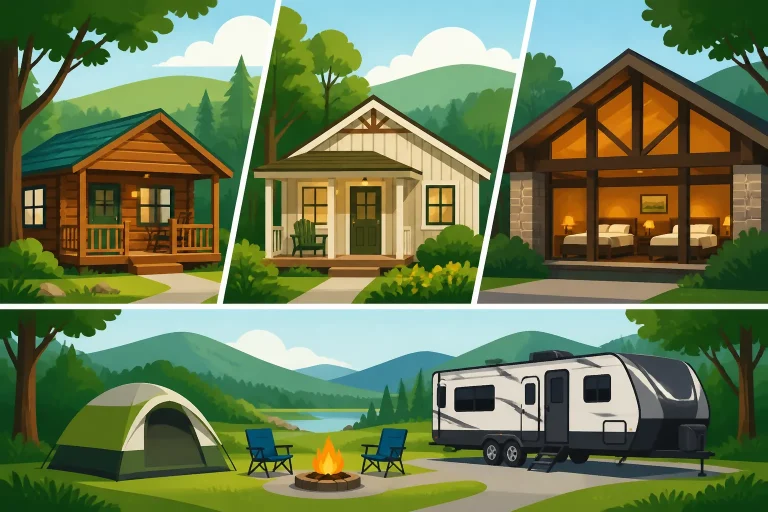
According to the Kentucky Department of Parks, a resort park includes a lodge with restaurants and overnight accommodations. The department also says Kentucky State Resort Parks offer lodges with hotel-style rooms and campgrounds. That combination can suit a group with different comfort preferences: some people might want a room, while others would rather camp, provided the park and the available accommodations fit the trip.
Recreational parks can be a natural place to start if the campground is central to your plans. The Kentucky Department of Parks says many state recreational parks offer campgrounds with primitive and RV sites. Because the offering varies, it is worth checking the specific park rather than assuming every recreational park has the same site types or facilities.
A useful first question is not “Which type of park is better?” but “What do I want the stay itself to feel like?” If you picture settling into a lodge room after a day outdoors, start by comparing resort parks and their lodging. If you picture bringing your own sleeping setup and using a campsite as your base, compare campground options across both park types.
| If your priority is… | A useful place to start | What to check before choosing |
|---|---|---|
| A room and access to lodge services | State Resort Parks | Room availability, dining arrangements, and which facilities will be open |
| Bringing camping gear or an RV | Parks with campgrounds | Site type, the space and services offered at that site, and current campground status |
| A mix of room and campground stays for a group | A resort park that offers both | Whether the relevant lodging and camping options are available for the same dates |
| A simpler campsite-focused trip | Recreational parks with campgrounds | Whether the campground has the site type and amenities you need |
| Deciding among parks by activities and setting | Either park type | The activities you care about, travel logistics, and the specific amenities at each property |
Use the table as a starting point, not a promise that any particular facility will be available. Park offerings can differ by property, and dates, operating schedules, and closures can affect what is usable during your visit. For a broad first comparison, Choosing a Kentucky State Park for Your Camping Trip can help you narrow the options.
What lodge comforts can add to a trip
A lodge stay can simplify the parts of travel that happen around the day’s activities. You do not need to plan the sleeping setup around a tent or RV, and a lodge may put overnight accommodations and dining in the same general setting. The exact experience depends on the property, so confirm what the lodge provides and which services will be operating during your dates.
For some travelers, the main benefit is having a room to return to. That can be appealing when the group includes people who do not want to camp, when carrying gear would complicate the trip, or when you want a lodging-centered break. It may also make coordination easier if different members of a group have different preferences. A lodge is not automatically the right answer, though: it is still important to compare room options, availability, dining details, and location with the plans for the rest of the trip.
The presence of a restaurant does not mean you should assume a particular meal, schedule, or dining arrangement. Check directly with the park or lodge for current details. If meals are a key part of your plan, find out what is available for the dates you are considering and whether you need another food plan for times when lodge dining does not fit your schedule.
Lodges also do not make a resort park a lodging-only destination. Resort parks offer campgrounds too, so a campsite may still be an option when you want to stay at a resort property. Compare the campground’s actual site choices with the lodge’s accommodations rather than deciding from the park category alone.
For a closer look at the kinds of lodging to compare, see Cabins, Cottages and Lodge Rooms in Kentucky State Parks, Explained. If you are choosing specifically between camping and a cottage or another rental, Bringing the RV or Renting a Cottage at a Kentucky Resort Park may help you think through the practical trade-offs.
Questions to ask about a lodge stay
Before settling on a lodge, check the details that can change how convenient the stay feels:
- What kind of room or accommodation is available for your dates?
- What services and facilities are operating during the visit?
- What are the dining options, and do they match your schedule?
- How far is the lodging from the activities or places you plan to visit?
- Does the party need any particular accessibility features or room arrangements?
- If the group includes campers, is a campground also available and suitable?
These questions help separate the idea of “lodge comfort” from the details of a particular booking. A lodge may be the right broad category, while a specific room or property may not match the group’s needs. Confirm the particulars with the park before making plans.
What to expect from a campground-focused choice
A campground-centered trip gives you a different kind of flexibility. You plan around the site you reserve or use, your own equipment, and the facilities the campground provides. The campground experience can vary substantially by site type and park, so “camping at a state park” is not enough detail to know whether a particular trip will work.
The Kentucky Department of Parks says many state recreational parks offer campgrounds with primitive and RV sites. That makes recreational parks a useful category to include when you are looking for a place to camp, but it is still important to check the individual campground. A primitive site and an RV site meet different needs; the site description should guide your choice rather than the park’s label.
Campgrounds are not limited to recreational parks. Kentucky State Resort Parks also offer campgrounds, which means camping can be part of a trip to a property that has a lodge. If you want the option of a lodge for some members of the party and campsites for others, check the specific park’s available accommodations and how close the relevant options are to one another.
For an RV trip, confirm that the site you are considering fits the RV and the services you expect to use. Do not assume that every RV site has the same hookups or layout. For tent camping, check the permitted setup and what the site provides. A campground’s facilities and services are separate from the question of whether the park is recreational or a resort park.
To compare campsite types in more detail, consult Tent, RV and Primitive Campgrounds Across Kentucky’s State Parks. You can also use What Every Kentucky State Park Campground Has, Water to Bathhouses to identify facility questions worth asking. Confirm the details for the particular campground and site, since a general description is not a substitute for the current listing.
Think through the work that comes with camping
Camping can be a satisfying choice, but it generally asks you to plan more of the stay yourself. You may need to bring sleeping gear, organize meals, and account for the facilities available at your site or elsewhere in the campground. The amount of preparation depends on the campsite and the equipment you already have.
That planning is not a drawback for everyone. Some campers value the routine of setting up, eating outdoors, and keeping their accommodation close to the campsite. Others would rather spend less time organizing gear and more time relaxing. If you are unsure, compare what you would need to bring and arrange against what the park’s lodging option offers.
Look beyond the word “primitive” or “RV” when reading campsite descriptions. Check what the site includes, how water and restroom access work, and whether any other facility you rely on is available. For first-time campers or people borrowing equipment, it can help to list what is essential rather than packing on the assumption that every campground offers the same conveniences.
Match the park type to your group and plans
Once you know whether the group leans toward a room, a campsite, or a mix, compare the trip itself. A park choice should work for the activities you want, the amount of travel between places, and the needs of everyone staying together. A park category can point you in a direction, but it cannot replace checking the individual property.
Choose a resort park when the lodge is part of the plan
A resort park is a strong candidate when you want overnight accommodations in a lodge and value the possibility of dining at the property. It can also make sense when the group wants a campsite option at a park that offers lodge accommodations. Check the lodge and campground separately: the existence of both does not establish that a particular room or site will be available for your preferred dates.
If a restaurant matters, look up current dining arrangements directly. If a specific room feature or accommodation is important, ask about that feature rather than relying on a broad description of the lodge. The same goes for the campground: compare the site’s layout and facilities with your equipment and expectations.
For a fuller explanation of the park category, see What Makes a Kentucky Park a State Resort Park?. If you expect to use a campsite, compare the resort campground with other options rather than assuming the lodge makes camping less suitable.
Consider a recreational park when camping is the priority
A recreational park can be a good place to begin when your main decision is which campground and site type will suit the trip. The Kentucky Department of Parks lists Kentucky as having 21 recreational parks, and many offer campgrounds with primitive and RV sites. That broad choice makes it sensible to compare the properties by the actual campsite and facilities you need.
Do not treat the count of parks as a count of campgrounds or as a guarantee that every property offers every site type. Start with the parks that fit your trip, then check the official details for the campground, access, and operating status. For more about the recreational-park category and camping, see Kentucky’s Recreational State Parks: Campgrounds and Year-Round Access.
A recreational park may also be a good fit if a lodge is not central to your plans. But avoid making the decision on that assumption alone: confirm what accommodation and services are offered at the specific park you are considering. Your best choice depends on the property’s actual options, not just the broad category.
Choose a mixed stay when the group wants different things
If some people prefer a room and others want to camp, a park with both lodging and a campground may be worth investigating. That does not automatically mean a mixed stay will be convenient. Check whether both options are available for the same dates, whether the locations make sense for your group, and what each person needs to bring or arrange.
A mixed stay can also be a way to test different comfort levels without asking everyone to make the same choice. However, the logistics matter. The group may need to coordinate separate reservations, meals, and equipment. Confirm whether the accommodations are close enough for the plans you have, and build the trip around what the park can actually provide.
For families or friends comparing different budgets, a useful exercise is to have each person name their non-negotiables. One person may need a room; another may want an RV site; someone else may care most about the campground facilities. Once those needs are clear, look for a park that meets the essentials rather than trying to find a single feature that makes every option identical.
A practical way to make the choice
Use a short comparison process before you commit to a park. It keeps the decision focused on the trip you are planning, rather than on assumptions about what a park type must include.
- Decide how you want to sleep. Choose whether the group wants a lodge room, a campsite, or a mix. If you are open to more than one option, keep both in the search.
- List the equipment and facilities you need. For a campsite, identify the site type and facilities that matter for your tent or RV. For a lodge, identify the room and services that are important.
- Match the property to the trip. Compare the location and available activities with the reason you are visiting. A convenient accommodation is less useful if the property does not suit the outing.
- Check specific availability and operating details. Confirm the campsite or room, current campground status, and any service you plan to use with the relevant park or official reservation system.
- Compare the full plan, not just the overnight option. Consider how meals, gear, transportation around the property, and group preferences fit together.
- Recheck important details before departure. Operating conditions and available facilities can change. Use the park’s official information for the latest details.
Cost can also influence the decision, but it is best to compare the actual options for your dates rather than assume one park type always costs less. Lodging, campsite choices, and the services you use can all affect the overall plan. For a structured look at camping expenses, see Budgeting a Kentucky State Park Camping Weekend. Check current figures and booking details with the relevant park or official reservation system.
In the end, pick the arrangement that reduces friction for your particular group. A lodge stay may make sense when a room and property dining are central to the experience. A campground may be a better match when your group wants to bring its own setup and choose a campsite. A resort park with both options may be worth comparing when preferences differ. The right answer comes from checking the specific property and choosing what fits the trip, not from treating either park type as universally better.
Frequently Asked Questions
Do Kentucky State Resort Parks have campgrounds?
Yes. The Kentucky Department of Parks says Kentucky State Resort Parks offer lodges with hotel-style rooms and campgrounds. Check the specific park for the campground’s available site types and current status.
Do recreational parks offer RV camping?
Many do. The Kentucky Department of Parks says many state recreational parks offer campgrounds with primitive and RV sites. Check the individual campground for site details and availability.
Is a resort park only for people staying in a lodge?
No. Resort parks also offer campgrounds, so camping can be an option. Compare the campground and lodge separately to see which one suits your group.
How should I choose between a lodge and a campsite?
Start with how your group wants to sleep and what facilities or equipment the trip requires. Then compare the specific room or campsite, current availability, and park services before you decide.
Sources
- Kentucky Department of Parks — FAQs – Kentucky State Parks (checked November 23, 2026)
- Kentucky Department of Parks — Explore Kentucky State Parks and Recreation |Nature's Playground Awaits! (checked November 23, 2026)
- Kentucky Department of Parks — Kentucky State Park Cabin Rentals (checked November 23, 2026)
Disclaimer
This article is for general informational purposes only and does not constitute professional advice. Laws, prices and regulations vary by location and change over time. Consult a qualified professional for guidance on your specific situation. Kentucky Camping & RV is not a government agency and is not affiliated with any government agency.